
Cape Sounion Sunset Private Tour – 6 Hours
340€ / Per group up to 7 persons
Private afternoon tour from Athens along the coast to the Temple of Poseidon at Cape Sounion, timed for sunset. €340 per group of up to 7.
6 hours
Private tour
Up to 7 passengers
Hotel pickup & drop-off
English-speaking driver
Overview
About This Private Tour
A six-hour private afternoon tour from Athens down the coast to Cape Sounion, timed so you are at the Temple of Poseidon when the sun goes down. We collect you from your hotel and bring you back to the door.
Athens has one perfect ending, and it is an hour down the coast.
The road south is the Athenian Riviera — the sea on your right all the way, until the city falls away and there is nothing left but rock and water as far as the cape.
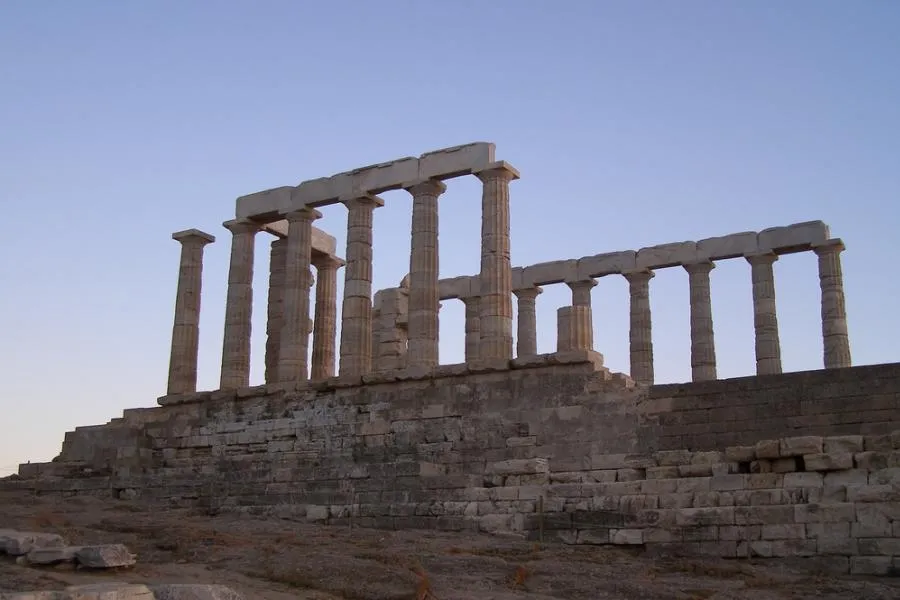
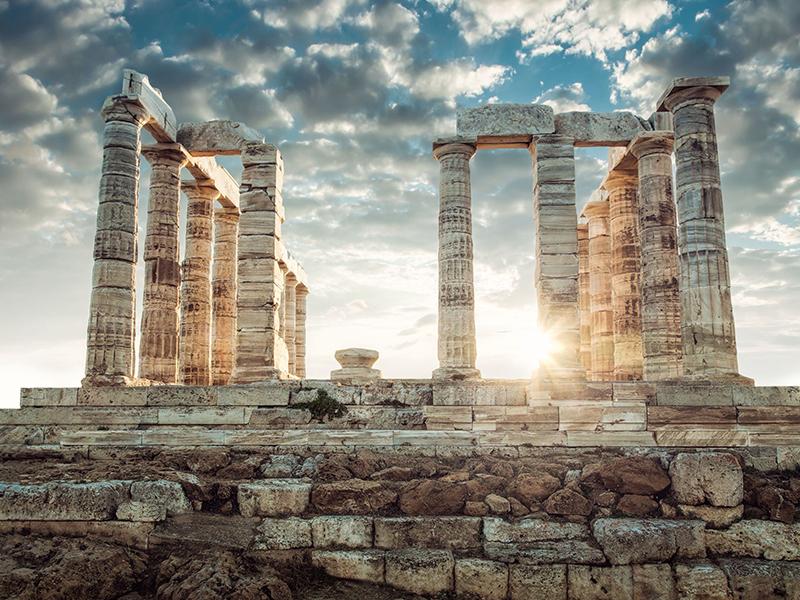
The Temple of Poseidon stands sixty metres above the sea on the last headland of Attica. Built in the fifth century BC, in the same years as the Parthenon, it rose on the ruins of an earlier temple destroyed by the Persians. It was built to be seen: sailors coming home to Piraeus could pick out its white columns from far out at sea. Fifteen of them still stand. On one, near the entrance, Byron carved his name.
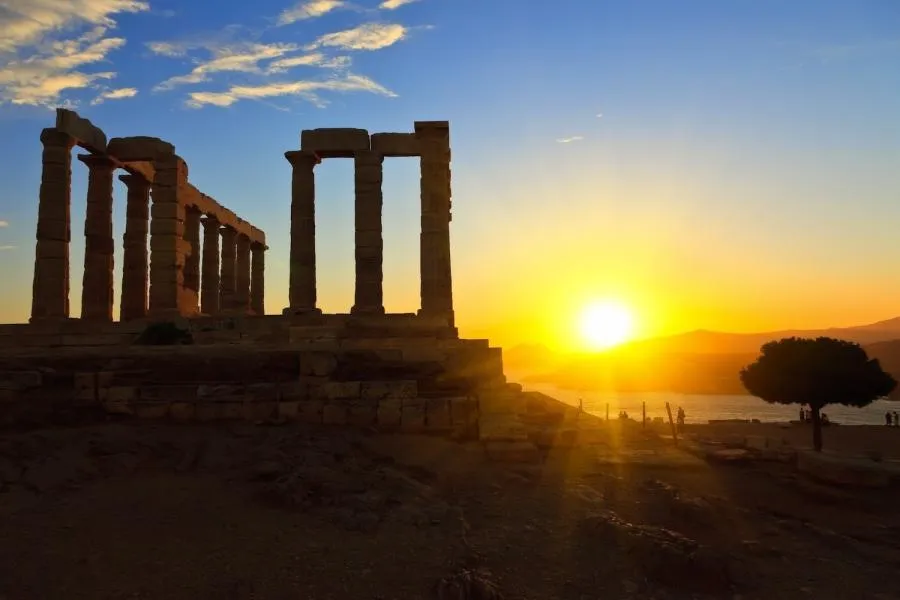
Then the sun sinks into the Aegean behind it, and the marble turns gold, then peach, then black against the last of the light. The site stays open until sunset — one of very few in Greece that do. There is a café and restaurant at the temple, and tavernas along the coast, so you can sit with it rather than simply photograph it and leave.
Below the cliff is where Aegeus is said to have stood, watching for his son’s ship. Seeing black sails, he threw himself into the sea. The Aegean has carried his name ever since.
The Athenian Riviera
Seventy kilometres of coast road south from the city, worth the drive on its own: Glyfada, Vouliagmeni, Varkiza, the beaches and marinas — and then the road empties, leaving nothing but rock and sea to the end of Attica.
The Temple of Poseidon
There has been a sanctuary on this headland since the Archaic period. The Persians destroyed the first temple in 480 BC, during the campaign in which Xerxes forced the pass at Thermopylae and then razed Athens itself. The temple that stands here now replaced it — built between 444 and 440 BC, as part of Pericles’ building programme, in the same years as the Parthenon.
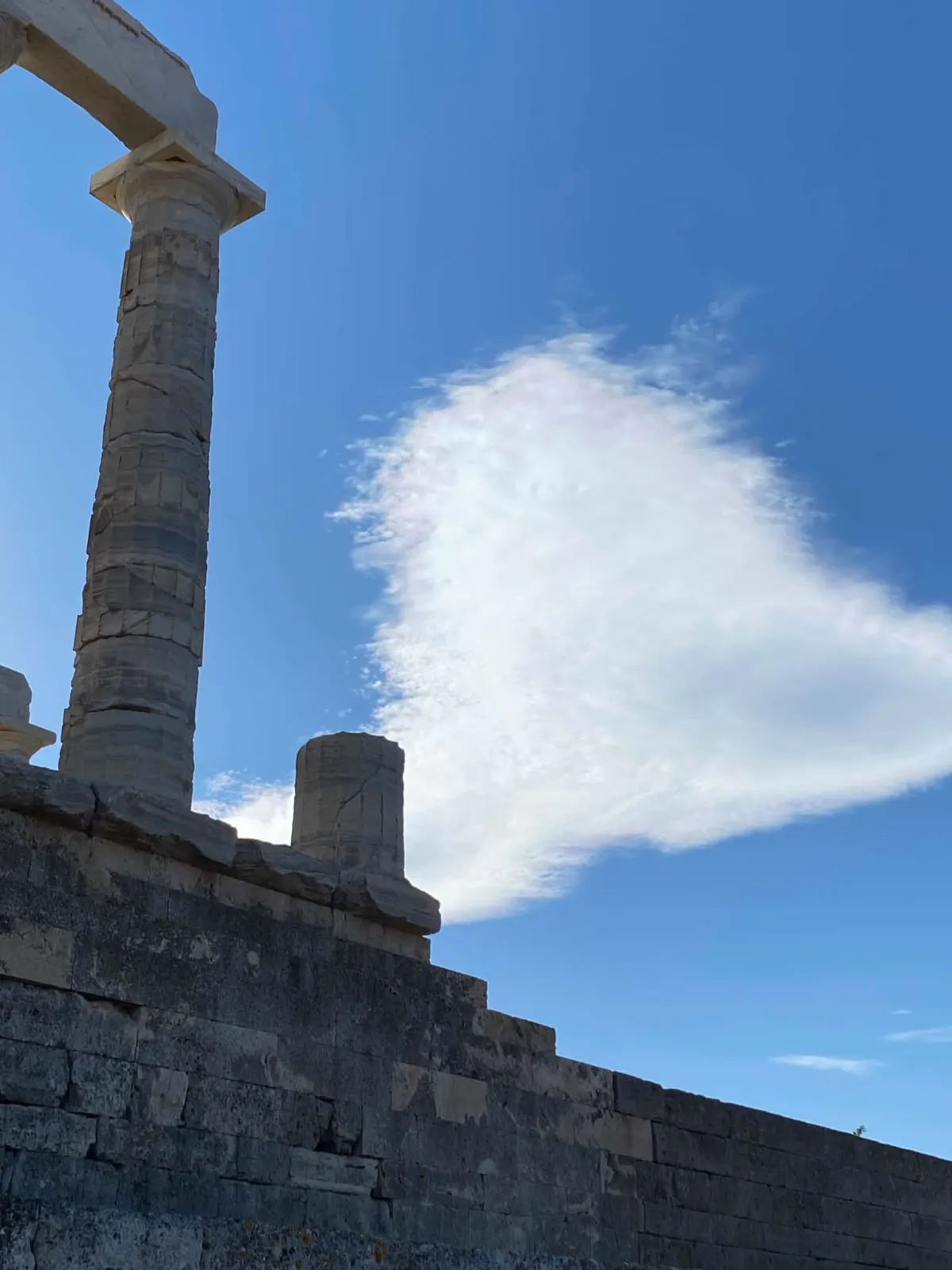
It is Doric, designed for this cliff: thirty-four columns originally, cut slimmer than the Doric norm — perhaps to withstand the wind on this exposed cape — from local Agrileza marble. Fifteen still stand after two and a half thousand years of salt and earthquakes. Inside stood a bronze statue of Poseidon, more than six metres tall.
Near the entrance, at the base of a column, is perhaps the most famous piece of graffiti in Greece: BYRON. He carved it during his Grand Tour, then returned years later to fight in the Greek War of Independence — and die for it.
Below the cliff is where Aegeus is said to have stood, watching for his son’s ship. Seeing black sails, he threw himself into the sea. The Aegean has carried his name ever since.
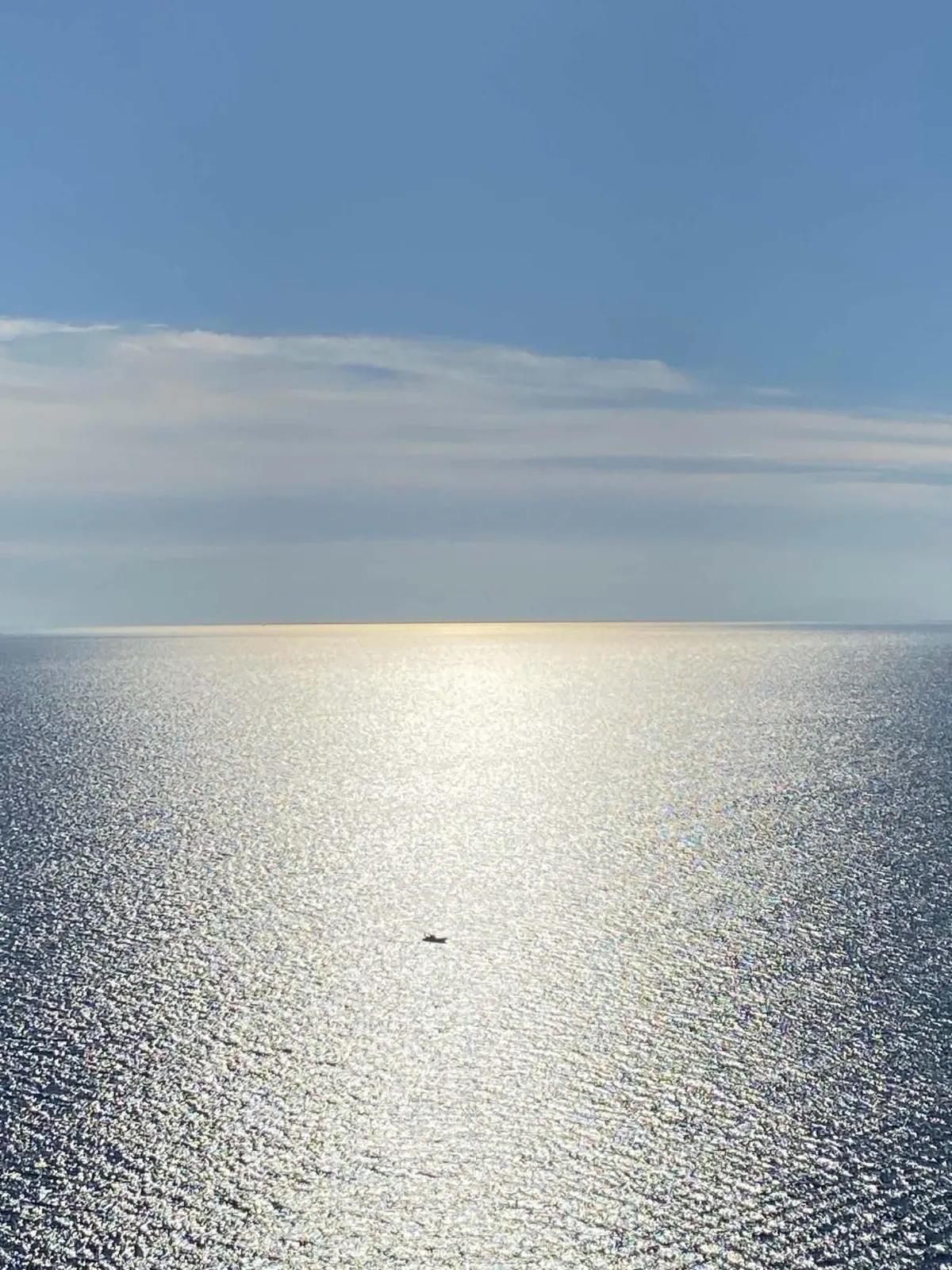
On a clear day, you can see Kea and Kythnos out in the haze.
The sunset
It is not a marketing claim, it is why the tour exists. The temple faces west across open water with nothing between it and the horizon, and the archaeological site — unusually for Greece — stays open until the sun is down.
The marble goes through the whole range: white, then gold, then the colour of the light, then a black colonnade against a red sky. Then everyone stops talking for a minute, which is the part nobody photographs.
Is the price per person or per group?
Per group. The €340 covers the whole 6-hour tour for up to 7 passengers in one minivan — it is not multiplied by the number of people.
Will we definitely see the sunset?
The tour is timed around it — that is the whole point of this version rather than the morning one. We work backwards from the sunset time on your date. Weather is weather, but the site faces open water, and cloud tends to make the sunset better rather than worse.
Is the site open at sunset?
Yes, and it is one of the very few archaeological sites in Greece that stays open until the sun is down.
Can we eat there?
There is a café and restaurant at the site itself, and tavernas along the coast nearby. Meals are not included, but a table with the temple and the sea in front of you is the reason many people book this rather than the morning tour.
What is the difference between the morning and sunset tours?
Same temple, same price, twelve hours apart. Morning gives you clear light on the marble, a quieter site and a swim afterwards if you want one. Sunset gives you the thing Sounion is famous for, and a meal by the water. Most people who have to choose choose this one.
Can you really see Byron's name?
Yes — carved at the base of one of the columns near the entrance during his Grand Tour in the early nineteenth century.
Why is the Aegean Sea called the Aegean?
After Aegeus, king of Athens, who, according to the myth, threw himself from the cliff at Sounion when he saw his son’s ship returning under black sails — the agreed signal that Theseus had died fighting the Minotaur. Theseus had survived, but forgotten to change them.
Is a guide included?
No. The price covers an English-speaking driver, not a licensed guide. A licensed guide can be added for €340; for other languages, contact us.
Are entrance fees included?
No. Entrance to the Temple of Poseidon is settled on the spot. It is strongly recommended, though, to buy the tickets in advance as there is a limit to the number of people that can enter and sunset is the busiest hour of the day. The official site is https://www.hh.gr
How far is Cape Sounion from Athens?
Αbout seventy kilometres south — roughly an hour and a half along the coast road.
How much walking is there?
Very little. A short walk up from the car park to the temple, on uneven ground. That is all.
Included in the tour price:
- English speaking driver
- Pick-up & Drop-off service from the hotel
- All expenses of the driver
- Complimentary bottled water
- All currently applicable taxes
Not included in the tour price:
- Gratuities: these are at the clients’ discretion
- Entrance fees to museums & archaeological sites
- Guide Services unless you select the extra service