
6 Day Peloponnese: Mystras, Olympia & Bassae
3820€ / Per group up to 7 persons
Private 6-day minivan tour from Athens: Mycenae, Epidaurus, Mystras, Olympia and Bassae, plus Ancient Messene. €3,820 per group of up to 7.
6 Days
Private tour
Up to 7 passengers
Hotel pickup & drop-off
English-speaking driver
Overview
About This Private Tour
This 6-day private tour stays entirely within the Peloponnese, visiting five UNESCO World Heritage Sites — Mycenae, Epidaurus, Mystras, Ancient Olympia and the Temple of Apollo Epicurius at Bassae — plus Ancient Messene, one of the finest archaeological sites in Greece and a strong candidate for future inscription. It is the only tour we offer that reaches both Mystras, the Byzantine city below Taygetos, and Messene. The price is €3,820 for the whole group, not per person: up to 7 passengers, or up to 6 when a licensed guide travels with you. Accommodation, meals and entrance fees to archaeological sites are not included, though on request we can arrange a complete package with accommodation included. A licensed guide can be added for each site.
Greece has 21 UNESCO World Heritage Sites, and the Peloponnese holds five of them — more than any other single region — with a sixth, Ancient Messene, already on the shortlist. This tour reaches all five of the peninsula’s inscribed sites without ever leaving it, and adds Messene along the way: a route through the Argolid, over Taygetos to the Byzantine world of Mystras, down to the Messenian plain, and up to Olympia and the mountain temple of Bassae.
Because the tour is private, the pace is yours. You travel in your own minivan with your own driver, and there is no coach timetable to keep.
Related itineraries. If you would rather cross to the mainland, our 6-day Peloponnese & Delphi tour trades Mystras and Messene for Delphi and the monastery of Hosios Loukas, and the 6-day Peloponnese, Delphi & Meteora tour reaches Meteora. This is the one to choose if you want the Byzantine and classical Peloponnese, at a slower pace, off the busiest routes.
Day 1 — Corinth Canal, Mycenae and Nafplio
UNESCO site: Archaeological Sites of Mycenae and Tiryns (1999) · Overnight: Nafplio
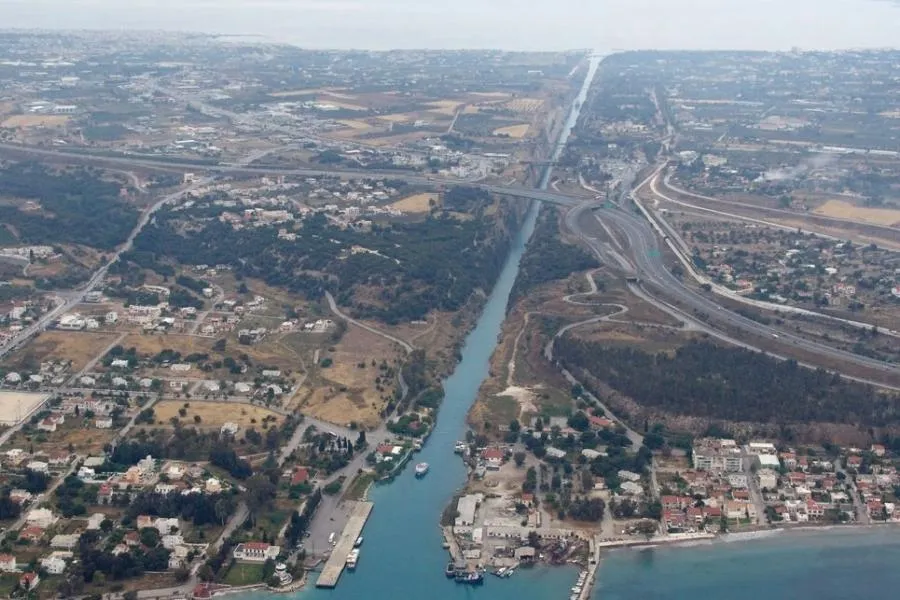
An hour out of Athens we stop at the Corinth Canal, the cut that separates mainland Greece from the Peloponnese — 79 metres deep through solid limestone, one of the most striking pieces of 19th-century engineering in Greece.
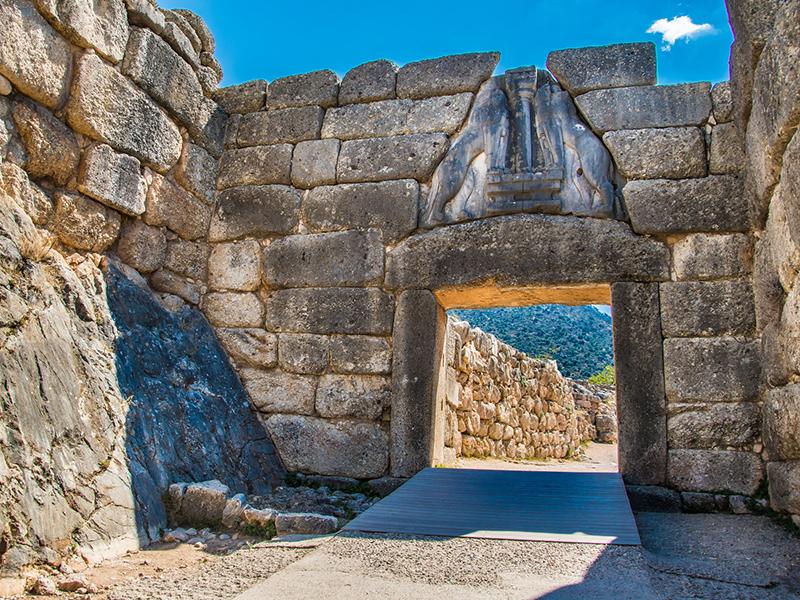
Then Mycenae, the citadel of Agamemnon and the best-preserved stronghold of the Mycenaean civilisation — the culture Homer wrote about seven centuries later. We walk the Lion Gate, the Grave Circles, the palace, and the cyclopean walls, and the vaulted tholos tombs nearby. UNESCO inscribed Mycenae in 1999, together with Tiryns.
A tasting follows at one of the Nemea wineries: Agiorgitiko, a red variety with Protected Designation of Origin, grown in this valley since antiquity.
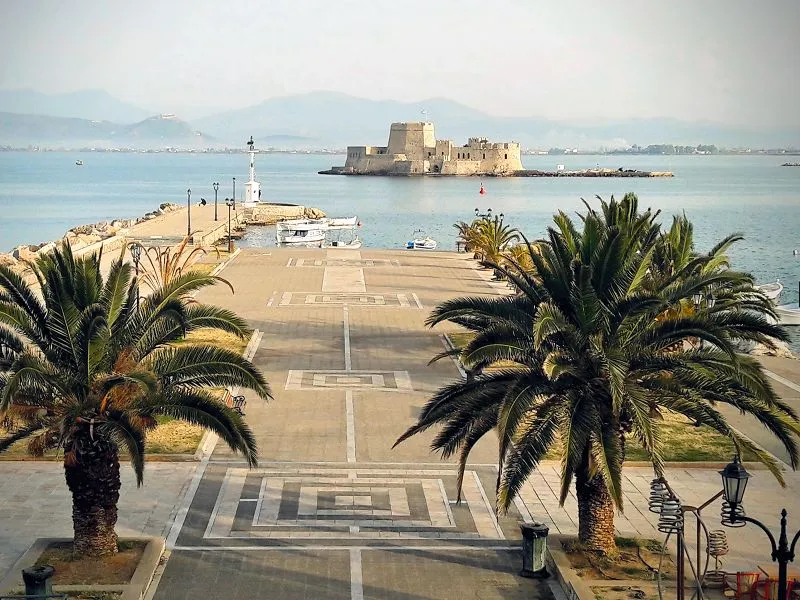
The day ends in Nafplio, the first capital of liberated Greece in 1829. The evening is yours.
Day 2 — Nafplio, Epidaurus and over Taygetos to Mystras
UNESCO site: Sanctuary of Asklepios at Epidaurus (1988) · Overnight: Mystras (new village)
The morning starts with the Archaeological Museum of Nafplio, its highlight the Dendra Panoply, one of the oldest surviving suits of full body armour in the world. Then Palamidi, the Venetian fortress on the 216-metre hill above the town: eight bastions, built between 1711 and 1714 in three years, and lost to the Ottomans in 1715.
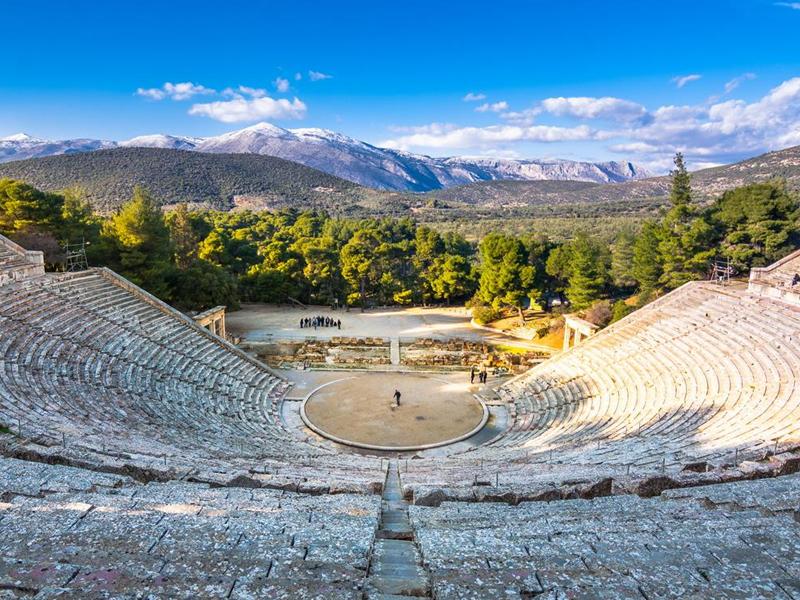
We cross to the Argolid’s Saronic coast for a seaside lunch, before Epidaurus — antiquity’s foremost healing sanctuary, with the abaton, where pilgrims slept in the hope of a healing dream, and the theatre: 4th century BC, and with acoustics that carry an ordinary speaking voice to all 14,000 seats. UNESCO inscribed it in 1988.
In the early afternoon we drive west, over the mountains, to Mystras, overnighting in the modern village below the Byzantine site.
Day 3 — Mystras and on to Kalamata
UNESCO site: Archaeological Site of Mystras (1989) · Overnight: Kalamata
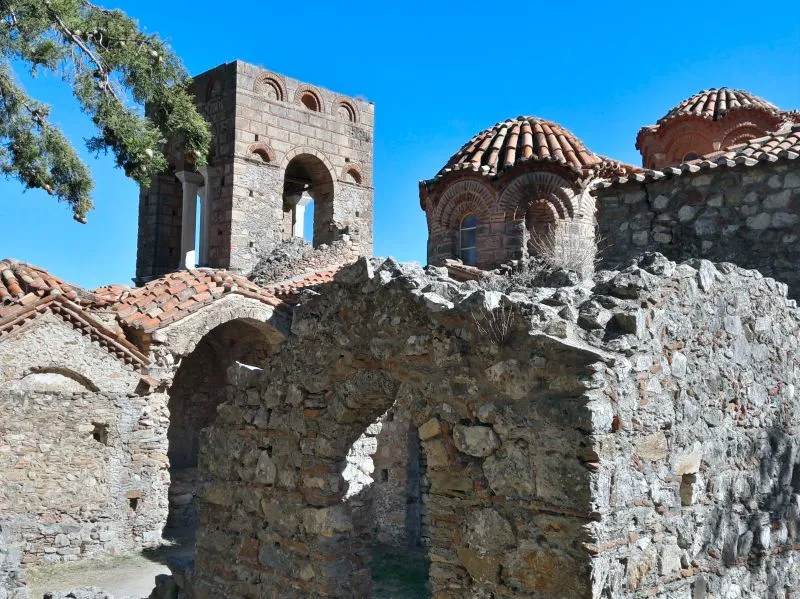
Mystras is the quiet highlight of the whole Peloponnese — a fortified Byzantine city spilling down the slope of Taygetos above Sparta. It was founded in 1249 by the Frankish prince William II of Villehardouin, ceded to the Byzantines in 1262, and grew into the capital of the Despotate of the Morea, a semi-autonomous province that lasted until the Ottoman conquest of 1460. In its last century it was a thriving centre of art and learning with direct ties to Constantinople. The churches, palaces and frescoed chapels stand along cobbled lanes, largely as they were left. UNESCO inscribed Mystras in 1989.
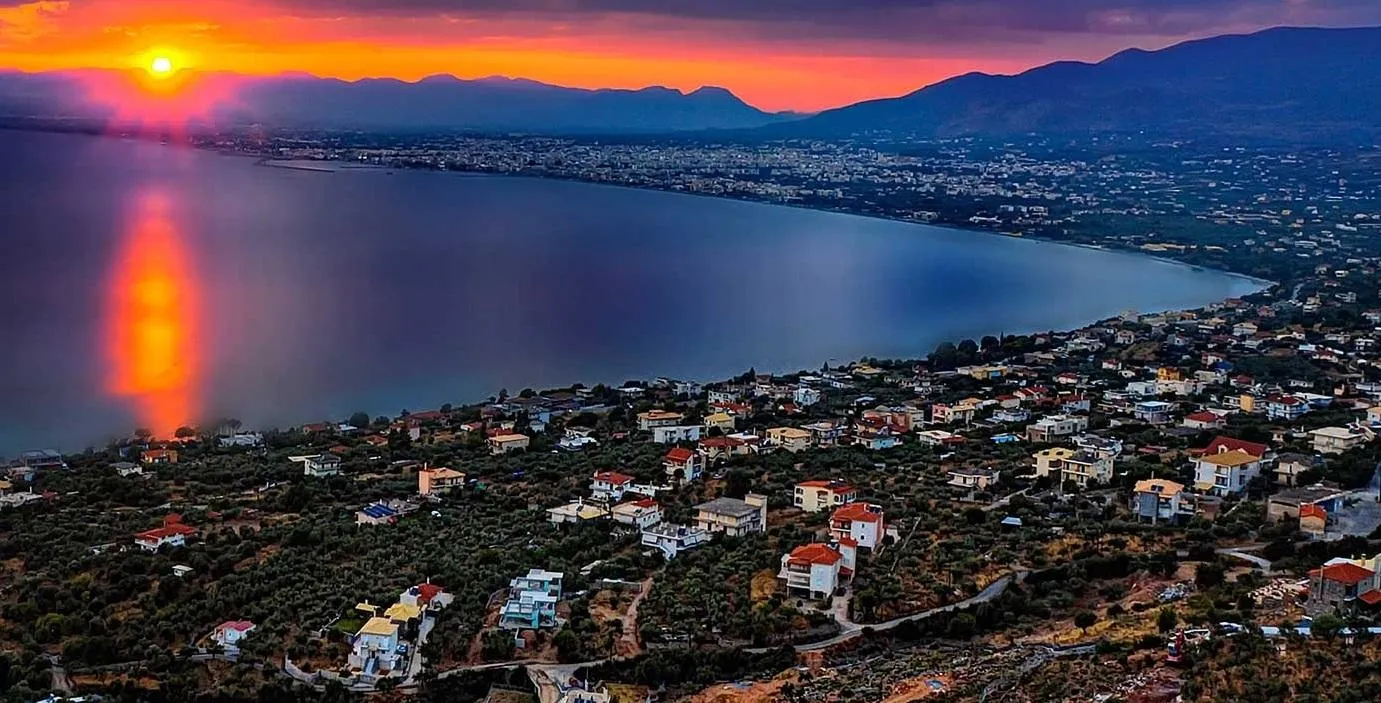
After lunch, a visit to the Museum of the Olive on the way, before driving on to the coastal town of Kalamata for the night.
Day 4 — Ancient Messene and on to Olympia
Overnight: Ancient Olympia
The morning is given to Ancient Messene — not yet a World Heritage Site, but on the shortlist, and one of the most impressive and best-preserved archaeological sites in Greece, still being excavated by the Archaeological Society of Athens. Unlike most Greek cities, Messene was founded in a single act: after the Theban general Epaminondas broke Sparta at the Battle of Leuctra in 371 BC, ending centuries of Spartan rule, the Messenians built a new capital — walls, temples, theatres, a stadium — much of it remarkably intact today.
In the afternoon we head north to Ancient Olympia for the night.
Day 5 — Ancient Olympia
UNESCO site: Archaeological Site of Olympia (1989) · Overnight: Ancient Olympia
The day is given to Ancient Olympia, at the meeting of the Alpheios and Kladeos rivers: the sanctuary of Zeus and the birthplace of the Olympic Games, held every four years from 776 BC until the late 4th century AD. We walk the Temple of Zeus — once home to the gold-and-ivory statue that was one of the Seven Wonders — the workshop of Pheidias, the Temple of Hera, and the stadium. The site museum holds the Hermes of Praxiteles and the pediments of the Temple of Zeus.
Two further museums — the Museum of the History of the Ancient Olympic Games and the Museum of the Modern Olympic Games — are close by and easy to visit on your own in the afternoon.
Day 6 — The Temple of Apollo Epicurius at Bassae, return to Athens
UNESCO site: Temple of Apollo Epicurius at Bassae (1986) · Ends: Athens
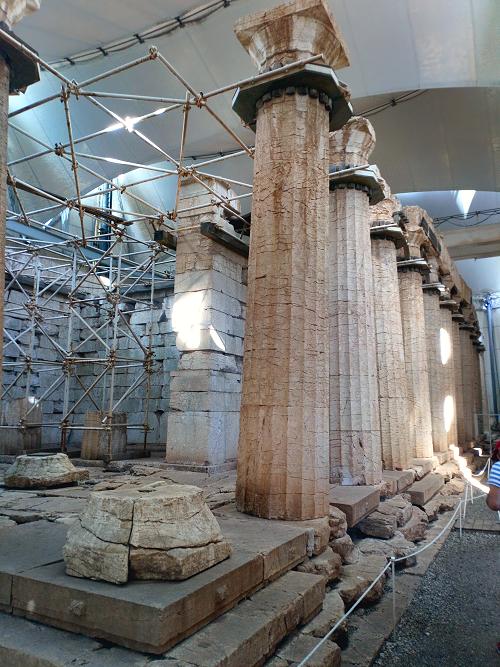
At 1,130 metres in the Arcadian mountains stands the Temple of Apollo Epicurius at Bassae, built in the late 5th century BC by Iktinos, the architect of the Parthenon, and one of the best-preserved temples in the country. In 1986 it became the first Greek monument ever inscribed on the UNESCO World Heritage List — before the Acropolis. (It stands under a protective tent during conservation works — fully visible from inside, but not the setting the photographs show.)
After lunch in one of Arcadia’s hidden corners, we make our way back to Athens.
Is the price per person or per group?
Per group. The €3,820 covers the entire 6-day tour for up to 7 passengers travelling together in one minivan — it is not multiplied by the number of people. A group of two and a group of seven pay the same total.
Which UNESCO World Heritage Sites does this tour visit?
Five: the Archaeological Sites of Mycenae and Tiryns, the Sanctuary of Asklepios at Epidaurus, the Archaeological Site of Mystras, the Archaeological Site of Olympia, and the Temple of Apollo Epicurius at Bassae. It also visits Ancient Messene, which is not yet inscribed but has been on Greece’s UNESCO shortlist since 2014.
How is this different from your other 6-day tours?
This is the only tour that stays entirely within the Peloponnese, and the only one that reaches both Mystras and Ancient Messene. The other 6-day tours cross to the mainland: one to Delphi and Hosios Loukas, the other to Delphi and Meteora. Choose this one for the Byzantine and classical Peloponnese at a slower pace; choose the others for the famous mainland names.
Is Ancient Messene a UNESCO World Heritage Site?
Not yet. It has been on Greece’s UNESCO Tentative List — the shortlist for future nomination — since 2014, and is widely expected to be inscribed. It is one of the largest and best-preserved ancient cities in Greece, and among the least crowded.
How many nights, and where?
Five nights: one in Nafplio, one at Mystras, one in Kalamata, and two in Ancient Olympia.
Can we travel with 7 passengers and a licensed guide?
Not in one vehicle. The minivan seats 7 in total and the guide occupies one of those seats. A group of 7 can travel without a guide; a group of 6 or fewer can travel with a guide. If you are 7 and would like a guide, contact us — we can arrange a second vehicle.
Is a guide included in the price?
No. The price includes an English-speaking driver, not a licensed guide. Licensed guides can be added per site as an extra service. The guide travels with you in the minivan and occupies one seat, so booking a guide reduces the maximum group size from 7 to 6 passengers. When you book a guide, remote guiding devices (“whisperers”) are included at no extra cost.
Is the Temple of Apollo Epicurius at Bassae open to visitors?
Yes. The temple has been covered by a protective tent during long-running conservation works, but it remains open and is fully visible from within the shelter. It was the first Greek monument inscribed on the UNESCO World Heritage List, in 1986.
Is accommodation included?
Not by default. Your accommodation and meals are booked separately — though on request we can arrange a complete package with accommodation included. Either way, the driver’s own accommodation, meals and insurance for the six days are covered in the tour price.
Are entrance fees to the archaeological sites included?
No. Entrance fees to museums and archaeological sites are paid on the spot at each location.
Where does the tour start and end?
The tour starts and ends in Athens, with pick-up and drop-off at your hotel. Both are included in the price.
When is the best time of year for this tour?
Spring (April–June) and autumn (September–October) are the most comfortable, with mild weather at the mountain sites of Mystras and Bassae. July and August are hot but bring the Epidaurus drama festival. Winter is possible but the Arcadian and Taygetos roads can be affected by snow.
Included in the tour price:
- English speaking driver
- Pick-up & Drop-off service from the hotel
- Remote guiding system (“whisperers” devices) when you book guide services
- All expenses of the driver (accommodation during multi-day tours, meals, insurance)
- Tolls
- All currently applicable taxes
Not included in the tour price:
- Accommodation during multi-day tours & meals for the guests; we can assist you with these arrangements
- Entrance fees to museums & archaeological sites: these are payable on the spot, as you go
- Guide Services unless you select the extra service