
Athens & Cape Sounio Tour
440€ / Per group up to 7 persons
Private 8-hour tour: the Acropolis, the Panathenaic Stadium, Syntagma, and the Temple of Poseidon at Cape Sounion. €440 per group of up to 7.
8 hours
Private tour
Up to 7 passengers
Hotel pickup & drop-off
English-speaking driver
Overview
About This Private Tour
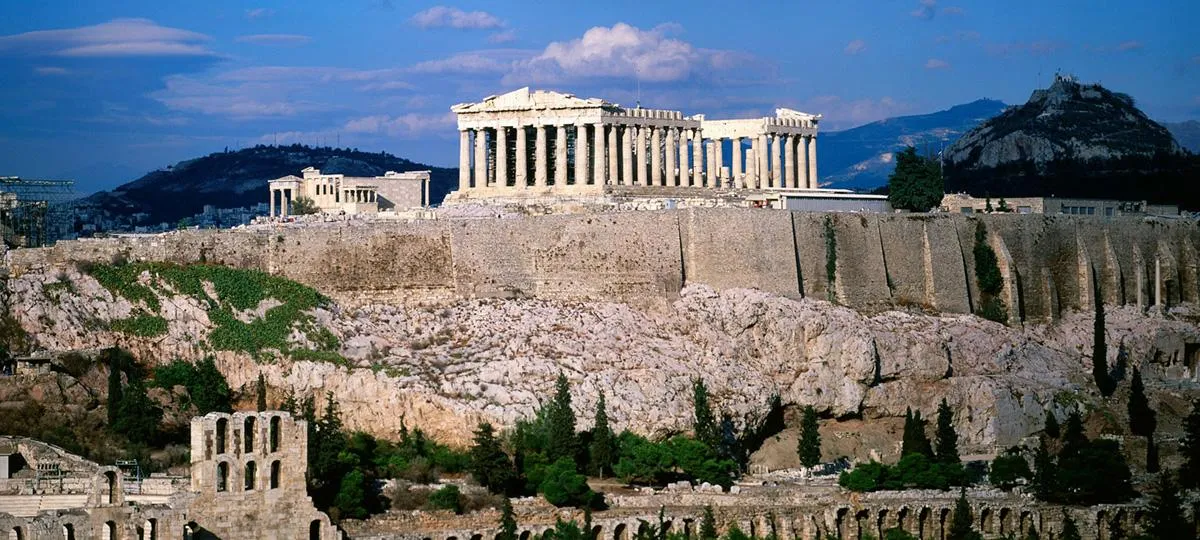
The tour visits some of Greece’s best-known historic landmarks, like the Acropolis of Athens and its new Museum, the internationally famous Odeon of Herodes Atticus that lies on its south slope since the 2nd century AD, and the Temple of Olympian Zeus.
The journey through Athens also includes a visit to the Panathenaic Stadium, or “Kallimarmaro” (beautiful marble).
Originally built in the 4th century BC, it was restored for the first Olympic Games of modern times in 1896, and is still in use for athletic and cultural events.
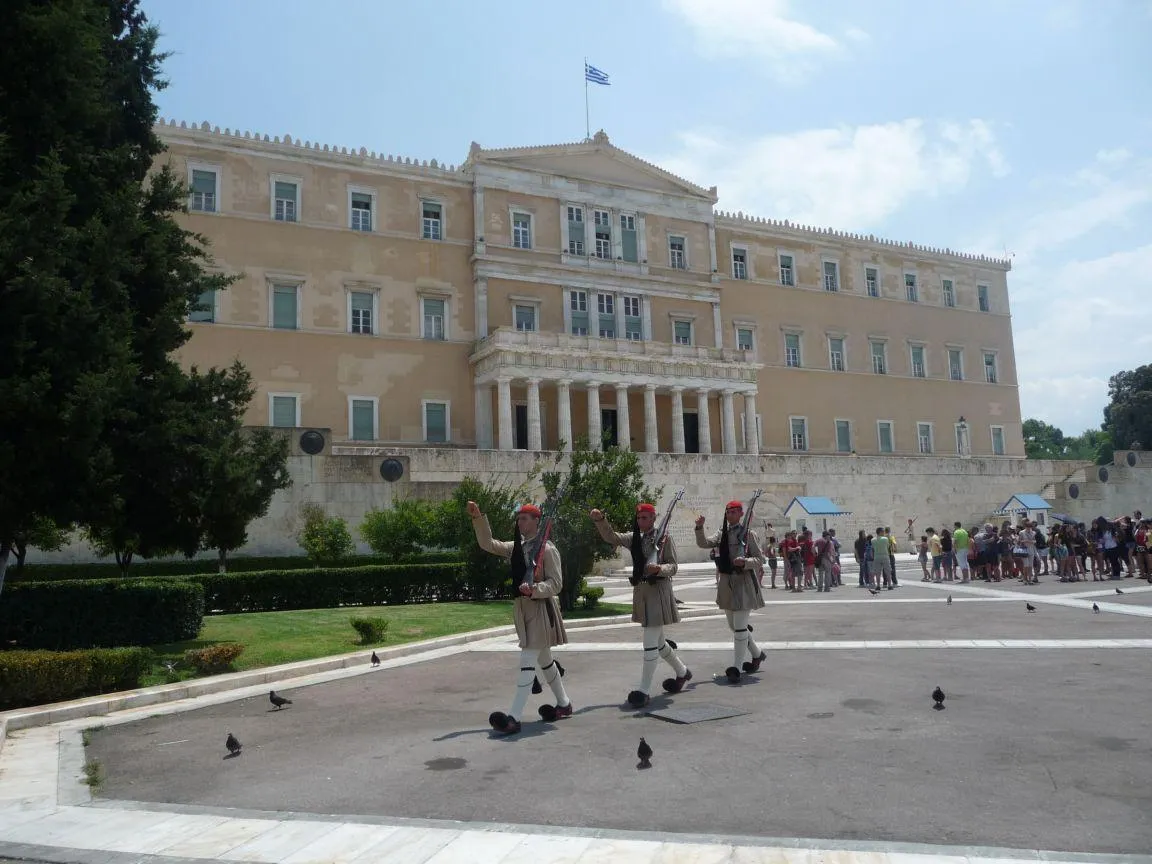
Athens is not only about antiquities, as several modern Greek treasures lay in plain sight within the city center. Originally built as the palace of King Otto of Greece in 1843, the Greek Parliament hosts the symbolic Tomb of the Unknown Soldier, guarded by the traditional Presidential Guard (Evzones), as it overlooks the adjacent Syntagma (Constitution) square.
Just around the corner are the National Gardens and the Zappeion Mansion, an 1888 cultural center bearing the name of Evangelos Zappas, a pivotal figure in the Olympic Games’ rebirth.
A stone’s throw away three neoclassical 19th-century jewels shine: the Athens Trilogy includes the historical building of the National & Kapodestrian University of Athens’ Deanery, with the National Library to its left and the Academy of Greece to its right.
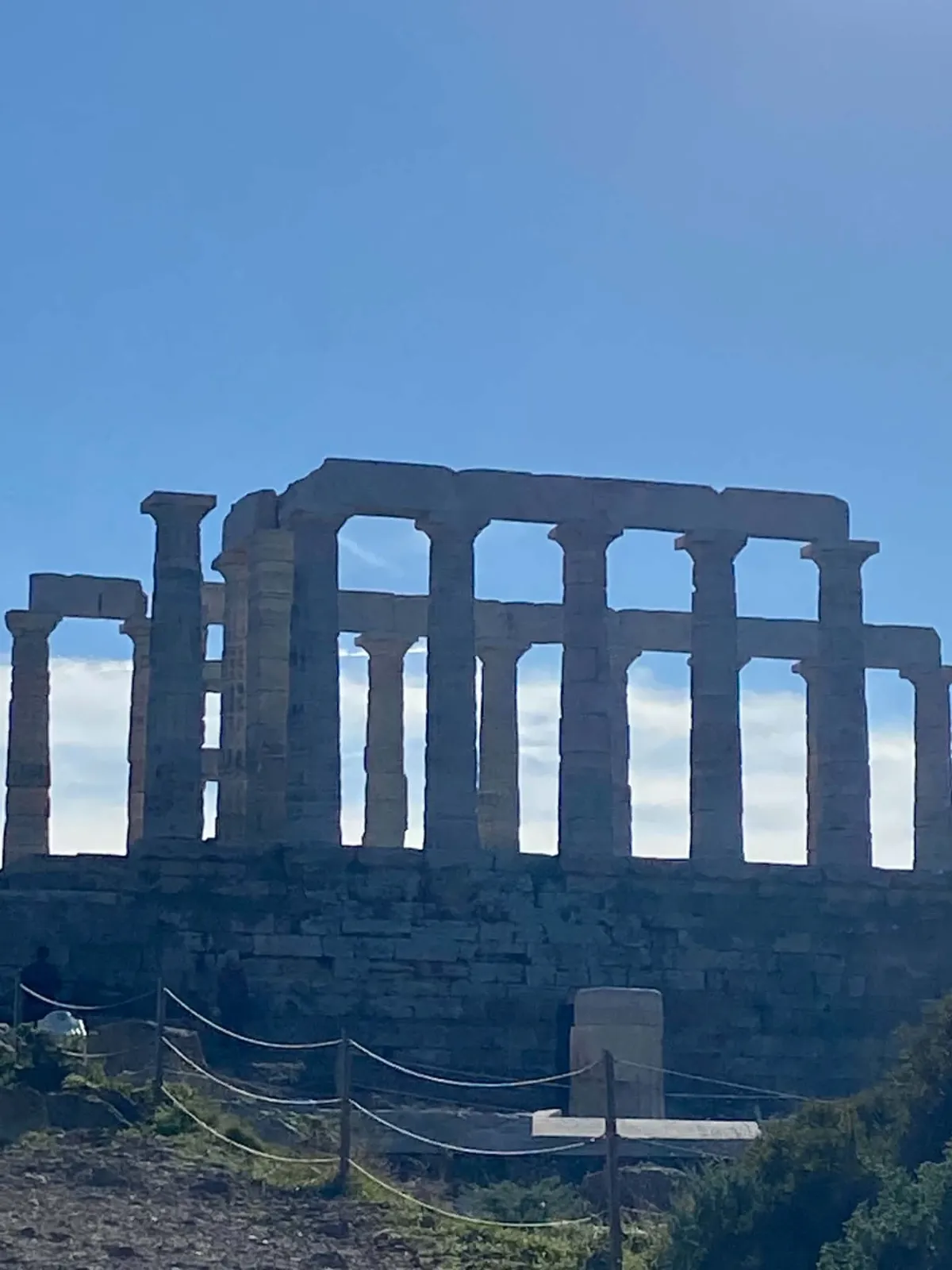
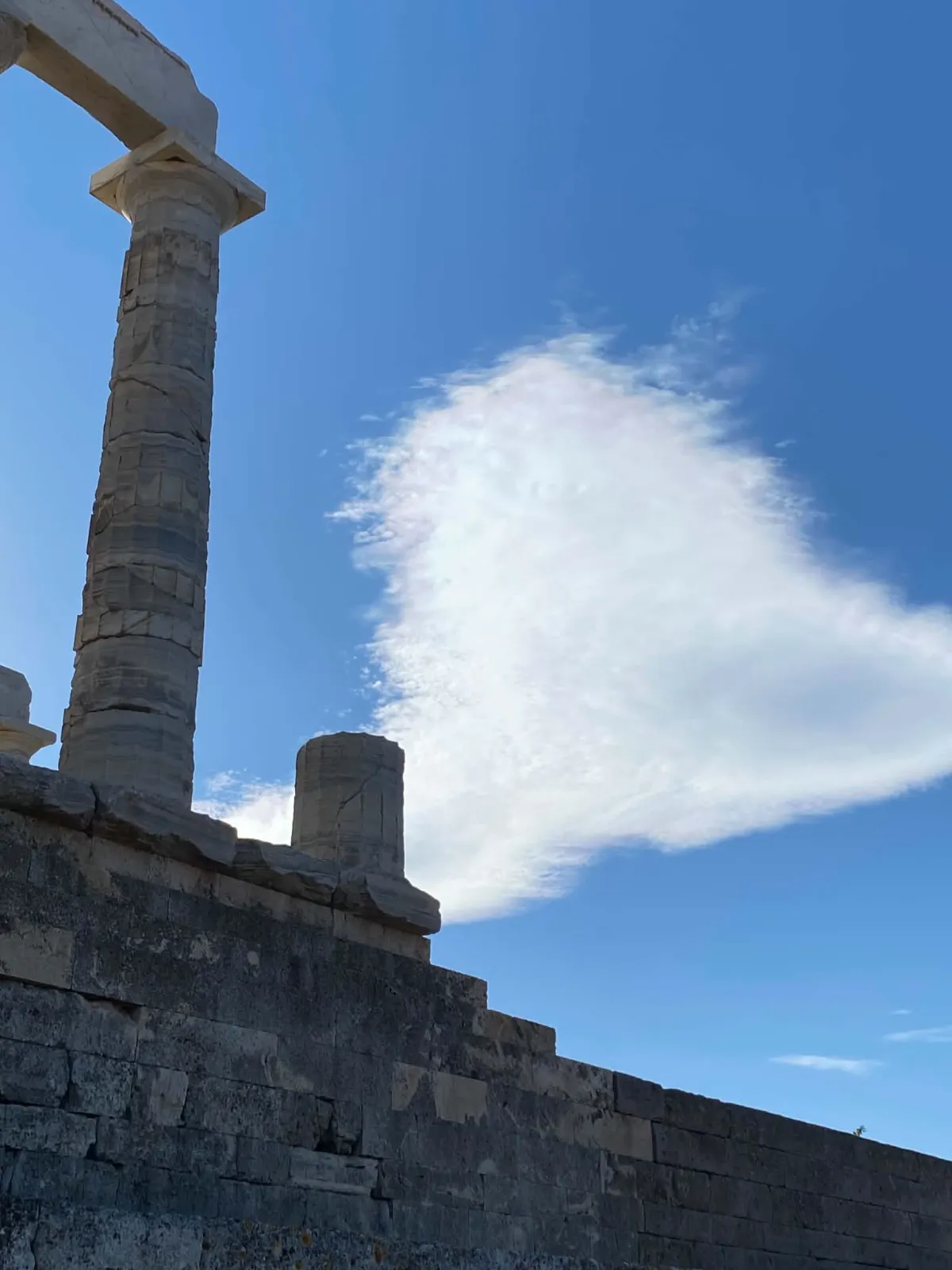
Leaving the Athenian center, we drive along the Athenian Riviera to arrive at Cape Sounio, the southernmost tip of the Attica Peninsula and home to the majestic Temple of Poseidon.
Athens
The Acropolis and the Parthenon, built in fifteen years in the fifth century BC after the Persians burned everything that was there before — with almost no straight lines in it: the columns lean inward, the floor swells upward, and every correction is invisible. Around it the Erechtheion with its Caryatids, and below the south slope the Odeon of Herodes Atticus, built in the second century AD and still used every summer for the Athens Festival. The Acropolis has been a UNESCO World Heritage Site since 1987.
The Acropolis Museum stands at the foot of the rock on pillars, above an excavated Athenian neighbourhood you cross on a glass floor. Its top floor is set at the angle of the Parthenon and glazed on all sides, so the frieze hangs where it was carved to hang, with the building itself visible through the glass.
The Temple of Olympian Zeus took nearly seven centuries — begun in the sixth century BC, abandoned half-built long enough for Aristotle to use it as a lesson in vanity, and finished by Hadrian, who added a statue of himself beside the god. Fifteen columns stand; a sixteenth lies where a storm dropped it, in sections, like a stack of coins knocked over.
The Panathenaic Stadium — the Kallimarmaro, “beautiful marble” — is the only stadium in the world built entirely of it. Begun in the fourth century BC as an earth bank, rebuilt in marble by Herodes Atticus (the same man as the Odeon), then quarried and forgotten for sixteen centuries, and dug out again for the first modern Olympics in 1896.
At Syntagma, the Parliament was built in 1843 as the palace of King Otto, Greece’s first king. In front of it, the Tomb of the Unknown Soldier and the Evzones of the Presidential Guard, in the pleated foustanella — the guard changes every hour, on the hour; the full ceremony with the band is Sunday at 11am.
Around the corner, in the National Garden, the Zappeion — built in 1888 and named for Evangelos Zappas, the Greek who spent his fortune trying to revive the Olympic Games decades before anyone listened, and who did not live to see 1896.
And along Panepistimiou, the Athens Trilogy: the University in the middle, the National Library on one side and the Academy of Athens on the other — three neoclassical buildings raised when Athens was a town of a few thousand people that had just been told it was a capital.
Cape Sounion - Poseidon Temple
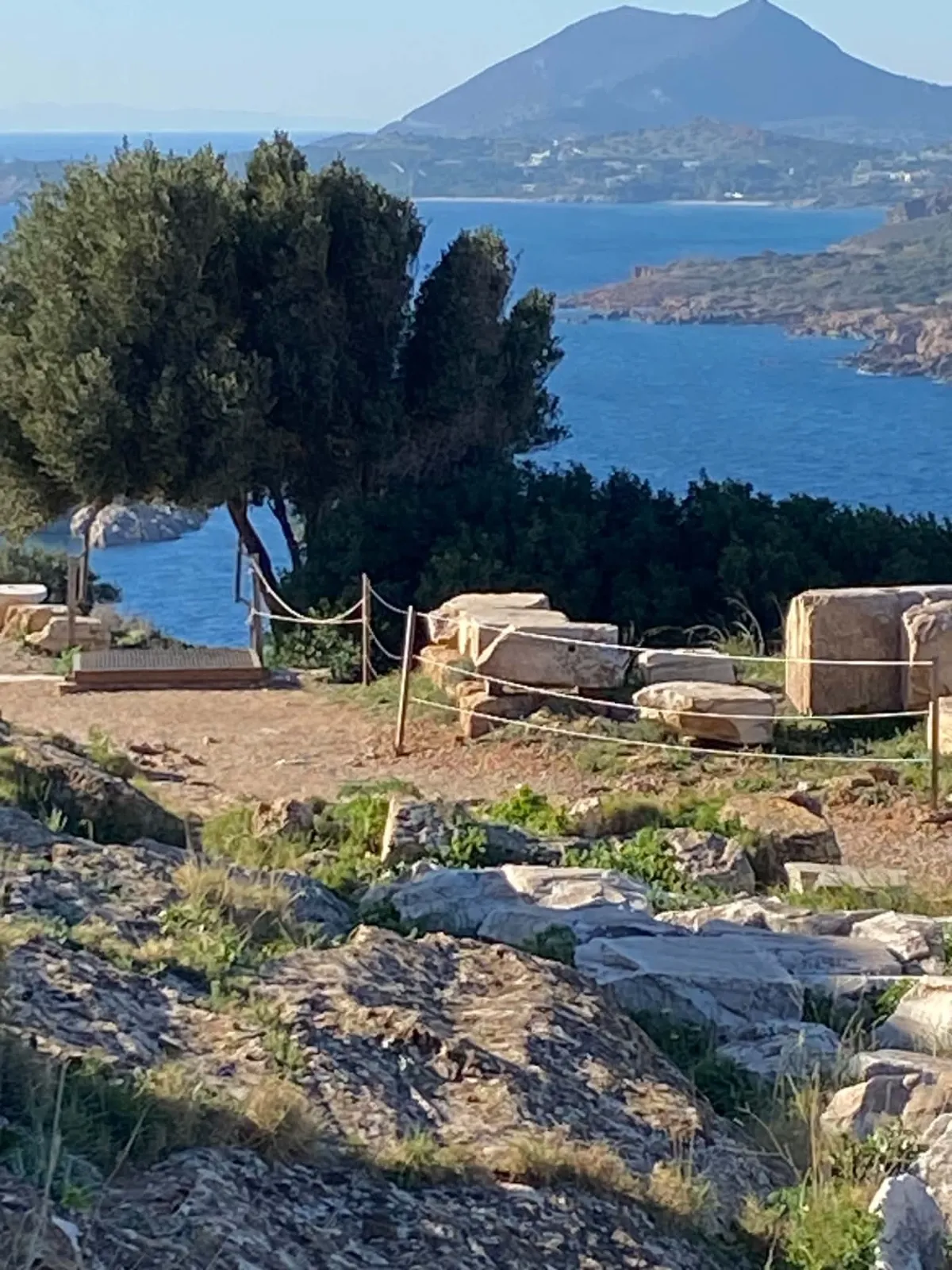
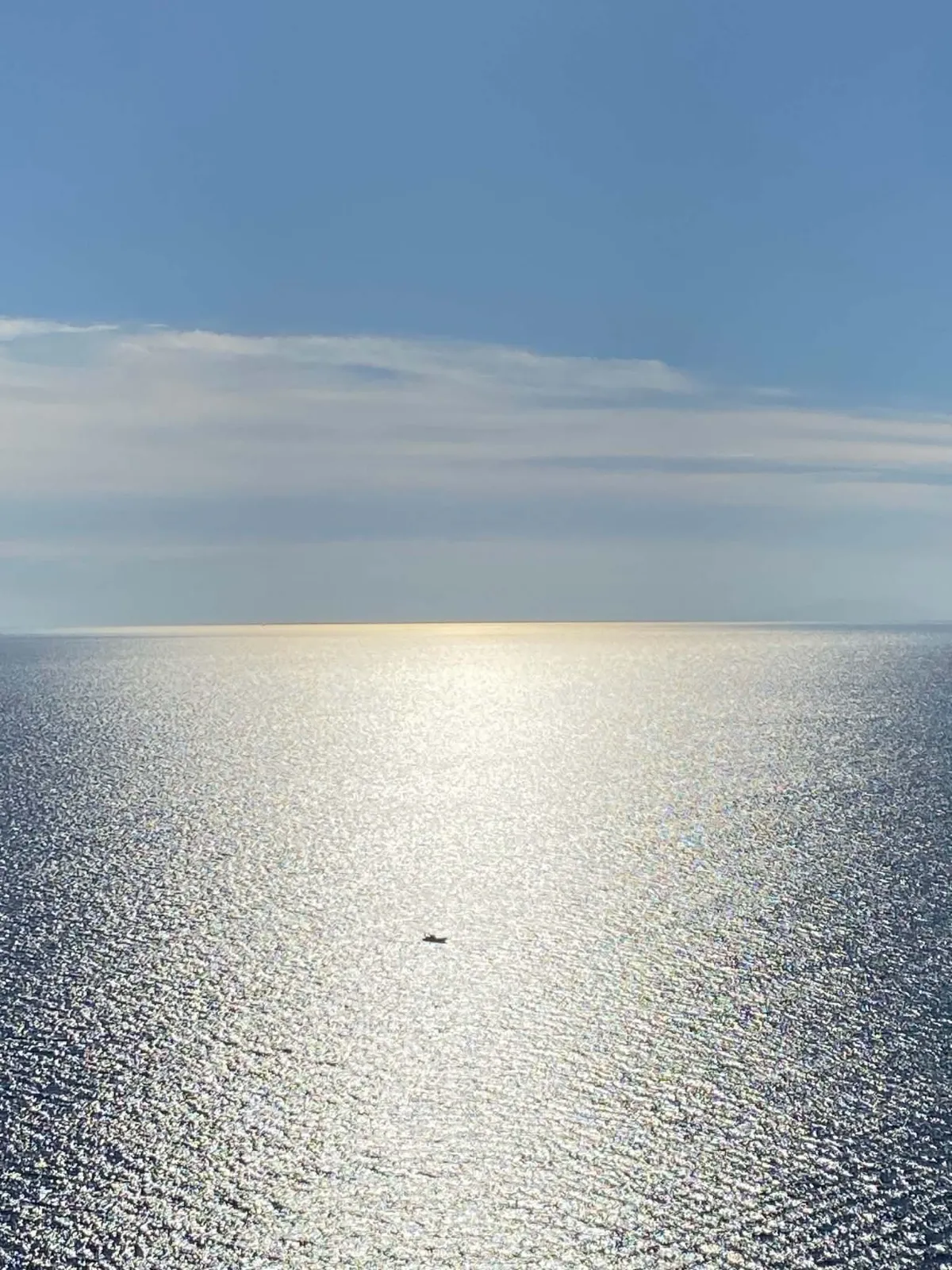
The drive out is the Athenian Riviera: forty-odd miles of coast road south from the city, past the marinas and the beaches, to the point where Attica runs out.
The Temple of Poseidon is on the headland, and it is one temple on a cliff — that is all it is, and it is enough. Sixty metres of rock, water on three sides, and on a clear day the islands of Kea and Kythnos out in the haze.
It was built 444–440 BC on the ruins of an earlier temple the Persians destroyed in 480. The columns are local Agrileza marble, thinner than the Doric norm — the architect cut them slender, possibly against the wind on an exposed cape. Inside stood a bronze Poseidon over six metres tall. Fifteen of the thirty-four columns are still up, after two and a half thousand years of salt and earthquakes.
Is the price per person or per group?
Per group. The €440 covers the whole 8-hour tour for up to 7 passengers in one minivan — it is not multiplied by the number of people.
What is the difference between this and the 8-hour Athens Sightseeing Tour?
Both are eight hours and cover the same Athens landmarks. This one drives out to Cape Sounion for the Temple of Poseidon; the other stays in the city and adds the National Archaeological Museum and Plaka. €440 against €420. It is a straight choice between a museum and a temple on a cliff.
Can you really see Byron's name on the temple?
Yes — carved at the base of one of the columns near the entrance, from his Grand Tour in the early nineteenth century. He came back to Greece years later to fight in the War of Independence and died there.
Why is the Aegean Sea called the Aegean?
After Aegeus, king of Athens, who according to the myth threw himself off the cliff at Sounion when he saw his son’s ship returning under black sails — the agreed signal that Theseus had died fighting the Minotaur. Theseus had in fact survived and forgotten to change them.
Is a guide included?
No. The price covers an English-speaking driver, not a licensed guide. A licensed guide can be added for €300; for other languages, contact us.
Are entrance fees included?
No. Entrance to the Acropolis, the Acropolis Museum and the archaeological site at Sounion is paid on the spot.
How far is Cape Sounion from Athens?
About seventy kilometres south — roughly an hour and a half along the coast road, which is worth the drive on its own.
How much walking is there?
The Acropolis is the hardest part, a steady climb on worn marble with no shade. Sounion is a short walk up from the car park to the temple. The minivan does everything between.
Included in the tour price:
- English speaking driver
- Pick-up & Drop-off service from the hotel
- Remote guiding system (“whisperers” devices) when you book guide services
- All expenses of the driver (accommodation during multi-day tours, meals, insurance)
- Tolls
- All currently applicable taxes
Not included in the tour price:
- Accommodation during multi-day tours & meals for the guests; we can assist you with these arrangements
- Entrance fees to museums & archaeological sites: these are payable on the spot, as you go
- Guide Services unless you select the extra service