
Full Day Marathon Tour
340€ / Per group up to 7 persons
Private 6-hour tour from Athens to Marathon: the battlefield of 490 BC and the tomb of the Athenian dead. €340 per group of up to 7.
6 hours
Private tour
Up to 7 passengers
Hotel pickup & drop-off
English-speaking driver
Overview
About This Private Tour
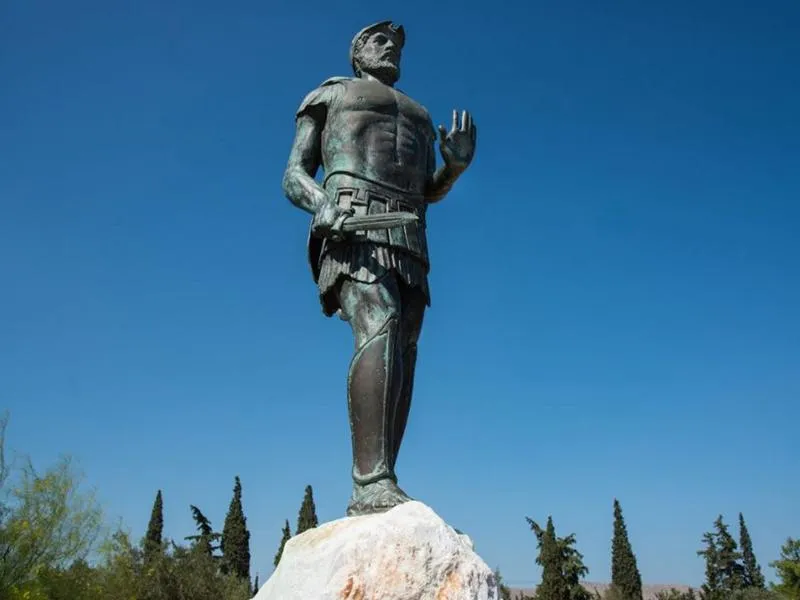
Pickup from your hotel for a six-hour tour to Marathon — an hour north of Athens, on a plain between the hills and the sea, where in 490 BC an outnumbered Athenian army stopped a Persian invasion and bent the direction of European history.
The Persians came ashore at Schinias, at the north end of the bay: a force sent by Darius I and commanded on the ground by his generals Datis and Artaphernes. Against it Athens put about ten thousand citizens and a thousand Plataeans, under Miltiades. The Athenian democracy was twenty years old. Nobody expected it to last the afternoon.
Miltiades thinned his centre and loaded his wings, let the middle give way, and closed in from both sides. Herodotus counted 192 Athenian dead and 6,400 Persian.
And then the city did something it did for no one else. Instead of carrying its dead home to the public cemetery, Athens buried them where they fell, under a mound of earth on the plain. The Soros is still there. You can walk around it in three minutes, and it is the reason to come.
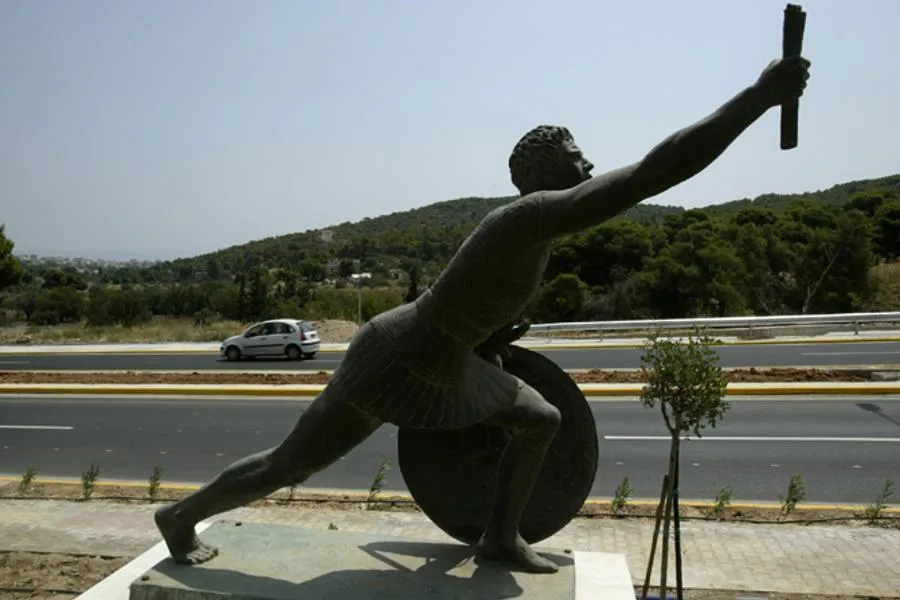
The story everyone knows is what happened next: a runner named Pheidippides carried the news to Athens, said we have won, and died. It is a wonderful story, and Herodotus does not mention it — writing thirty years after the battle, closer to it than we are to the moon landings. What he does record is better. Before the fighting, Athens sent Pheidippides to Sparta to ask for help: roughly 240 kilometres across the mountains, arriving, he says, on the second day. The Spartans agreed, but could not march before the full moon. He ran back. Six times a marathon, each way, and he lived.
As for the distance — 42.195 kilometres has nothing to do with any of this. Marathon to Athens is about forty, which is roughly what was run at the first modern Olympics in Athens in 1896. The number we use was fixed at the 1908 London Games, when the start was moved back to sit beneath the windows of the royal nursery at Windsor Castle so the children could watch, and the finish was shifted to face the royal box. It stuck.
The road out of Athens follows broadly the ancient one, and the Athens Classic Marathon still runs it every November — starting near the Tomb, finishing in the Panathenaic Stadium in the city.
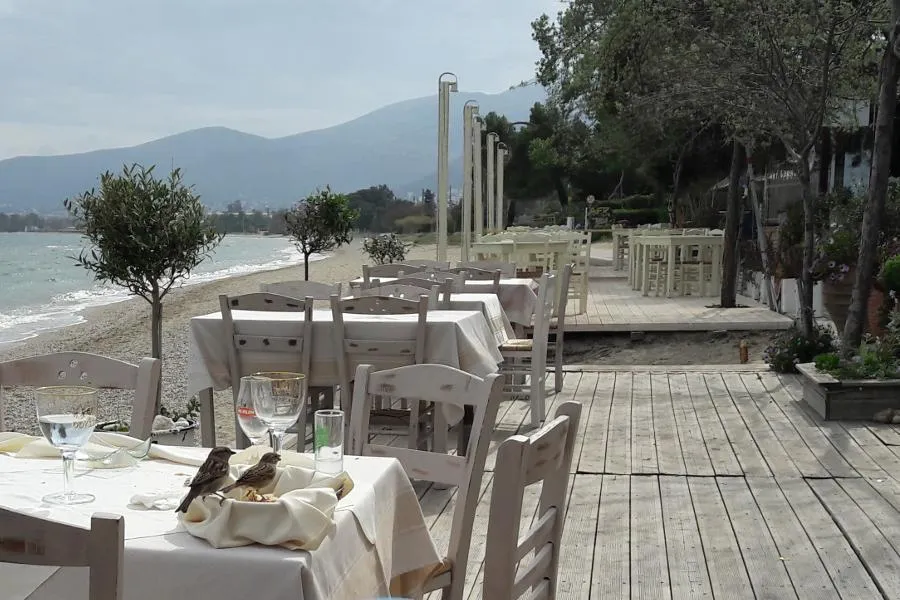
But Marathon is not only the battle. It sits on a long coast of beaches, tavernas and marinas, and it is where Athenians drive out for lunch on a Sunday — which, after two and a half thousand years, is its own kind of answer.
The plain and the Soros
Marathon is a wide flat plain between hills and the sea, and the reason the battle happened here is that it is the one place near Athens where cavalry could be landed and deployed. The Persians came ashore at Schinias, at the north end — now a pine forest and a beach.
Miltiades commanded the Athenians: about ten thousand of them, with a thousand Plataeans, against a Persian force that had been sent by Darius I and was commanded on the ground by Datis and Artaphernes. He thinned his centre and loaded his wings, let the middle give, and closed the wings in from both sides.
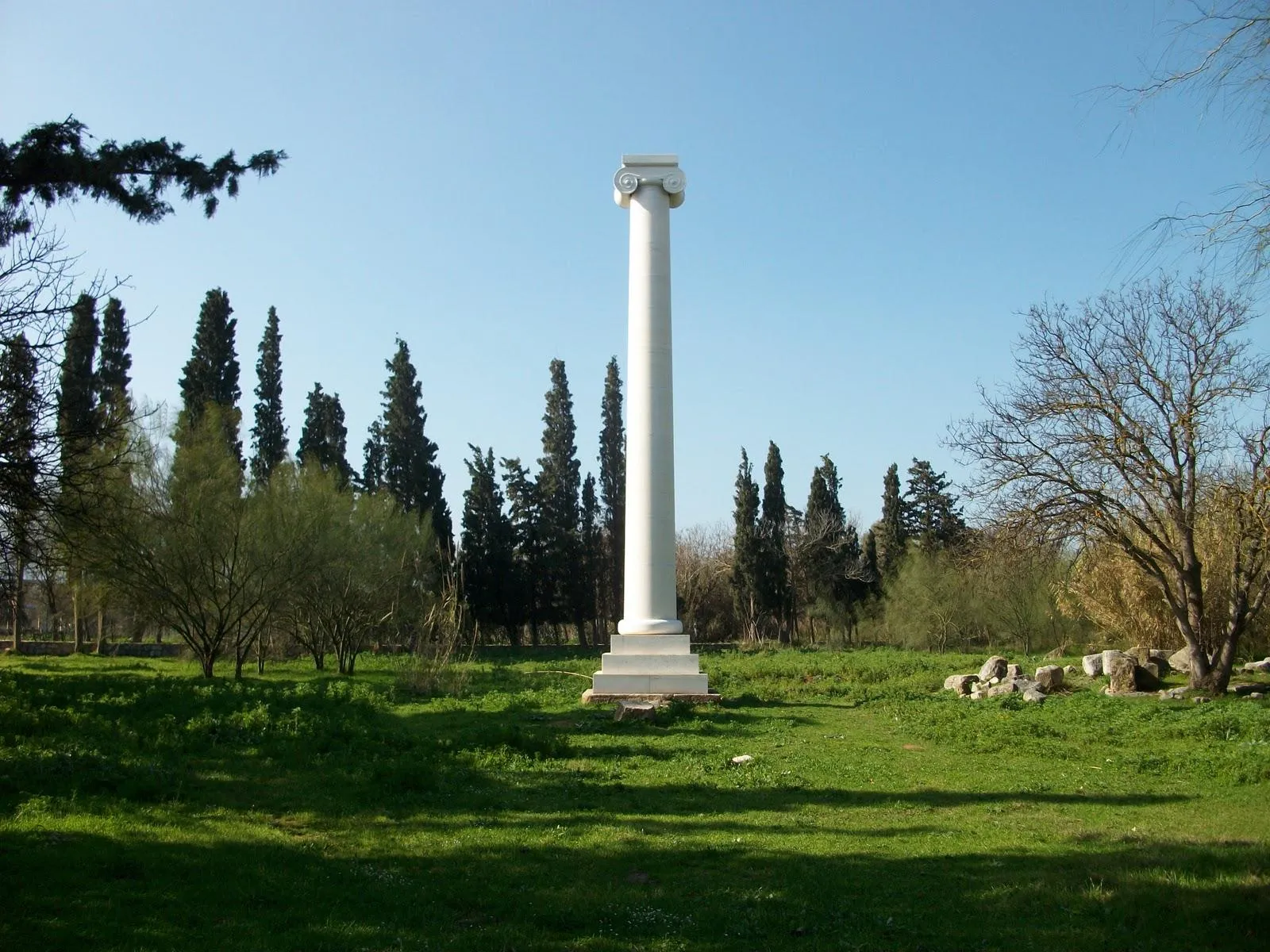
The Soros is the burial mound of the 192. It is the reason to come: not a monument built later to commemorate something, but the actual earth heaped over the actual men, standing on the plain for two and a half thousand years. When it was excavated in the nineteenth century, they found the ash layer and the burnt bones.
The Athens Classic Marathon starts here every November and finishes in the Panathenaic Stadium in Athens — which you can see on our Athens city tours.
The run that actually happened
Everyone knows the story: a runner named Pheidippides carried the news from Marathon to Athens, said “we have won,” and died.
Herodotus does not mention it. He wrote thirty or forty years after the battle, closer to it than we are to the moon landings, and he records exactly one run — and it is a better one.
Before the battle, Athens sent Pheidippides to Sparta to ask for help. He covered roughly 240 kilometres on foot across the mountains of the Peloponnese and arrived, Herodotus says, on the second day. The Spartans said yes, but they could not march until the full moon. He ran back.
That is nearly six times a marathon, in each direction, and he lived. The Marathon-to-Athens death run appears centuries later, and the sources cannot agree on who did it — Plutarch calls him Eucles or Thersippus; Lucian calls him Philippides. The name attached to it now belongs to the man who ran to Sparta.
Modern runners settled the argument in 1983 by trying it: the Spartathlon covers 246 kilometres from Athens to Sparta and gives you 36 hours. Most people do not finish.
And the marathon distance? 42.195 kilometres has nothing to do with Greece at all. Marathon to Athens is about 40 km, which is what they ran in 1896. The modern distance was set at the 1908 London Olympics, when the start was moved back to sit beneath the windows of the royal nursery at Windsor Castle and the finish was shifted to face the royal box. It stuck.
Is the price per person or per group?
Per group. The €340 covers the whole 6-hour tour for up to 7 passengers in one minivan — it is not multiplied by the number of people.
Why is a marathon 42.195 kilometres?
Because of a window at Windsor Castle. The distance has no connection to Greece: Marathon to Athens is about 40 kilometres, which is roughly what was run at the first modern Olympics in Athens in 1896. At the 1908 London Olympics the start was moved so the royal children could watch from the nursery windows, and the finish was aligned with the royal box — 26 miles 385 yards, or 42.195 km. It was standardised internationally in the 1920s and has not changed since.
Did Pheidippides really run from Marathon to Athens?
Probably not. Herodotus, our earliest source and writing only thirty or forty years later, records that Pheidippides ran from Athens to Sparta — about 240 kilometres — before the battle, to ask for help, and then ran back. He says nothing about a run from Marathon to Athens. That story appears centuries afterwards, and the later sources name the runner Eucles, Thersippus or Philippides rather than Pheidippides. The documented feat is six times longer than a marathon, and he survived it.
Can you still see the burial mound?
Yes. The Soros, the mound raised over the 192 Athenians who died in the battle, stands on the plain where they fell. Athens buried its war dead in the city cemetery as a rule; Marathon is the single exception.
Is this where the Athens Marathon starts?
Yes. The Athens Classic Marathon runs every November from Marathon to the Panathenaic Stadium in Athens, along broadly the ancient route.
Is a guide included?
No. The price covers an English-speaking driver, not a licensed guide. A licensed guide can be added for €280, for other languages, contact us.
How far is Marathon from Athens?
About 42 kilometres north-east — an hour or so each way. It is the closest of our tours outside the city.
Is there anything besides the battlefield?
Marathon sits on a long coast with beaches, seaside tavernas and marinas, and it is where Athenians come for lunch on a Sunday. Schinias, where the Persians landed, is now a pine forest, a national park and the rowing centre built for the 2004 Olympics.
How much walking is there?
Very little. The plain is flat and the Soros is a short, easy walk. It is the least demanding tour we run.
Included in the tour price:
- English speaking driver
- Pick-up & Drop-off service from the hotel
- Remote guiding system (“whisperers” devices) when you book guide services
- All expenses of the driver (accommodation during multi-day tours, meals, insurance)
- Tolls
- All currently applicable taxes
Not included in the tour price:
- Accommodation during multi-day tours & meals for the guests; we can assist you with these arrangements
- Entrance fees to museums & archaeological sites: these are payable on the spot, as you go
- Guide Services unless you select the extra service