
Full Day To Meteora
800€ / Per group up to 7 persons
Private 12-hour tour from Athens to the Meteora monasteries — a UNESCO World Heritage Site. Hotel pick-up. €800 per group of up to 7.
12 hours
Private tour
Up to 7 passengers
Hotel pickup & drop-off
English-speaking driver
Overview
About This Private Tour
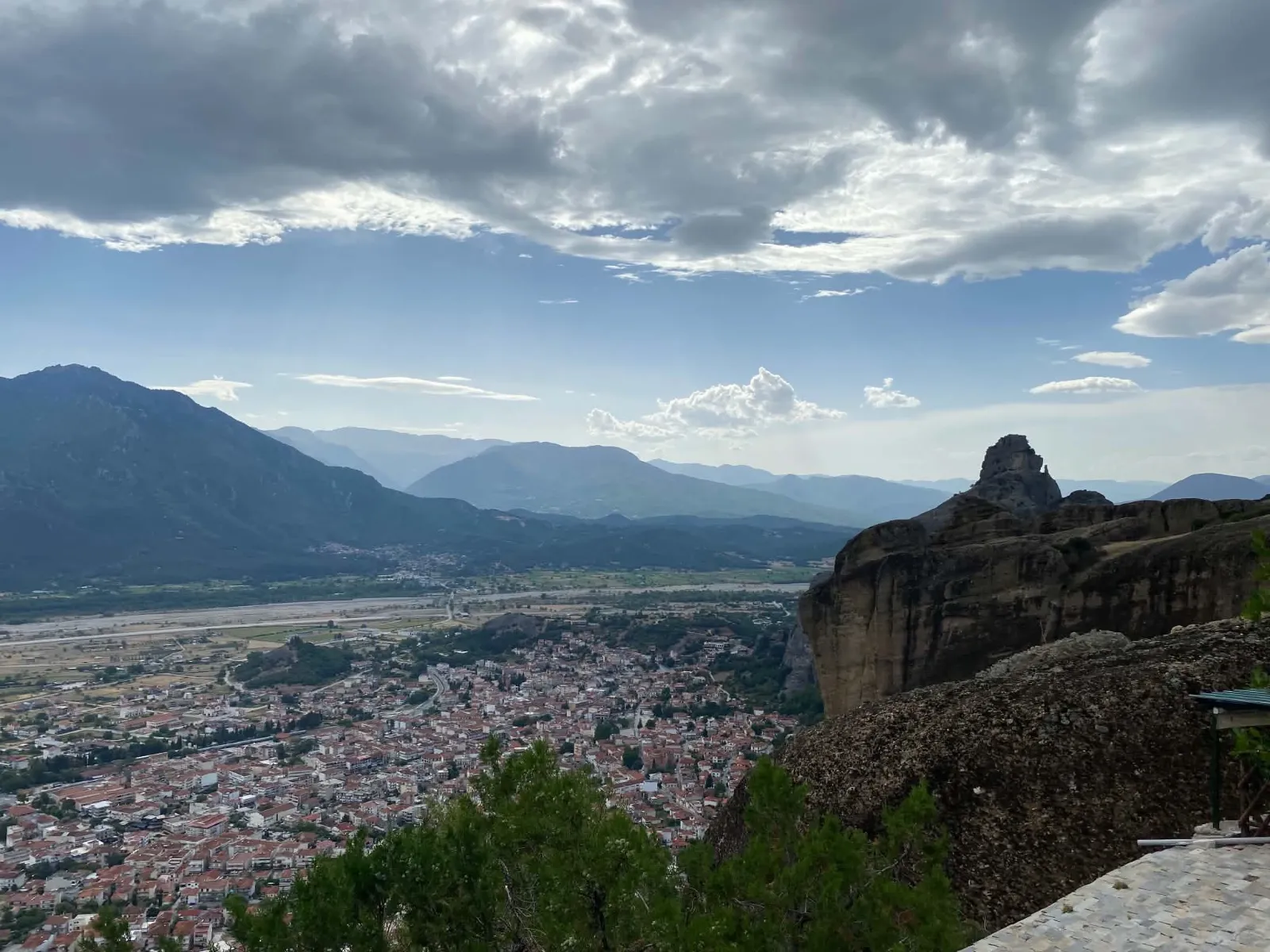
A twelve-hour private tour from Athens to Meteora — six working Orthodox monasteries built on top of sandstone pillars above the Thessalian plain, and a UNESCO World Heritage Site since 1988. We collect you from your hotel and bring you back to the door.
You can still see how they got up there.
In the tower at Varlaam there is a windlass, and coiled beside it the net. Until roads were cut in the 1920s, that was the way up — for every monk, every sack of flour, every roof beam, every visitor. You sat in the net and men above you turned the handle. The mechanism is still there and it still works.
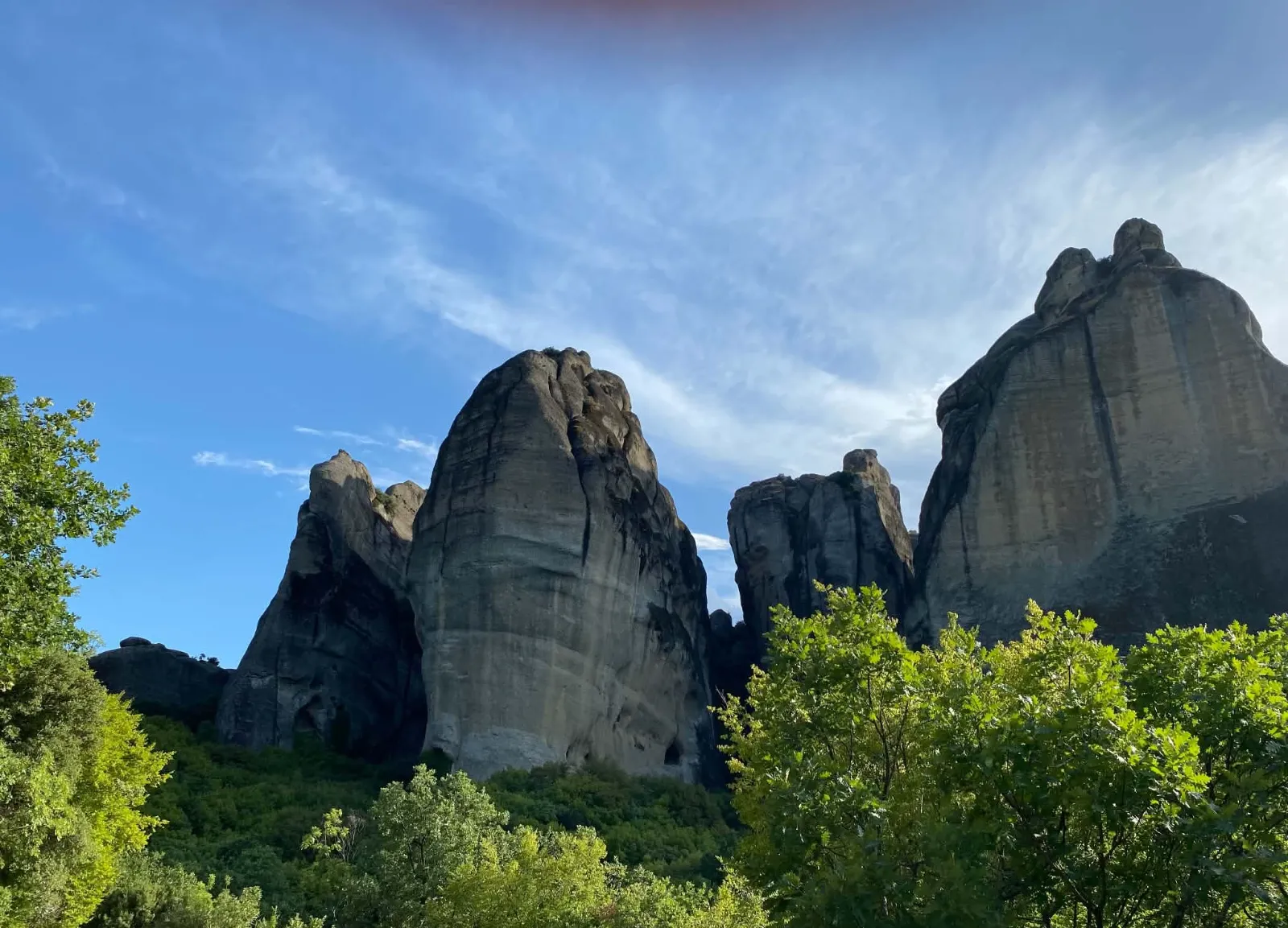
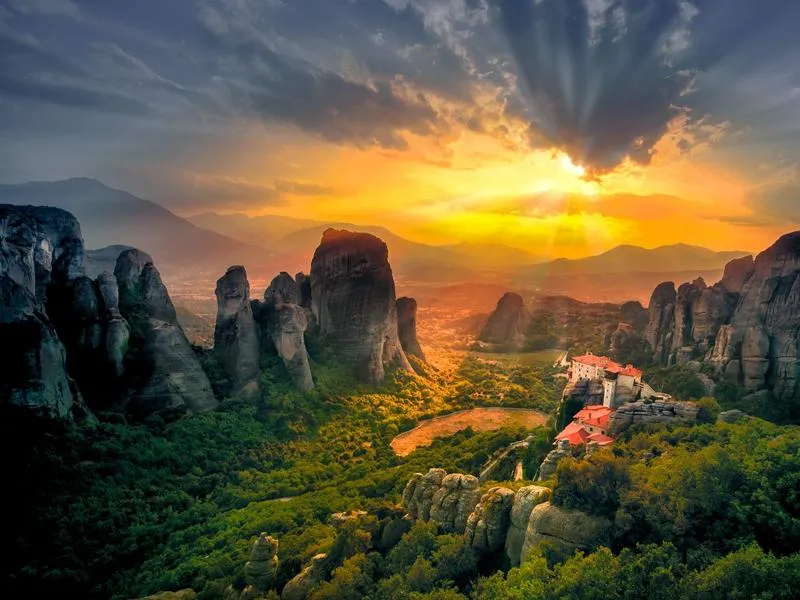
The rocks came first: sixty million years of river sediment, compacted, lifted and split until what was left standing was a field of grey pillars with nothing around them. Hermits found the caves in them by the eleventh century. Then, around 1340, a monk named Athanasios arrived from Mount Athos, climbed the broadest rock, and stayed. He called the place Meteora — suspended in the air. By the sixteenth century there were twenty-four monasteries up there.
Six are left, and they are not museums. Monks and nuns still live in them.
Meteora is one of only two places in Greece that UNESCO lists for its nature and its culture at once — the rocks and the monasteries, inseparable, each one meaningless without the other. The other is Mount Athos, which almost nobody may enter. This one you can walk into.
Prefer it unhurried? Meteora is an overnight stop on our 6-day Peloponnese, Delphi & Meteora tour and our 7-day tour.
The rocks
They are what UNESCO calls the natural half of the site, and they are the reason the rest of it exists.
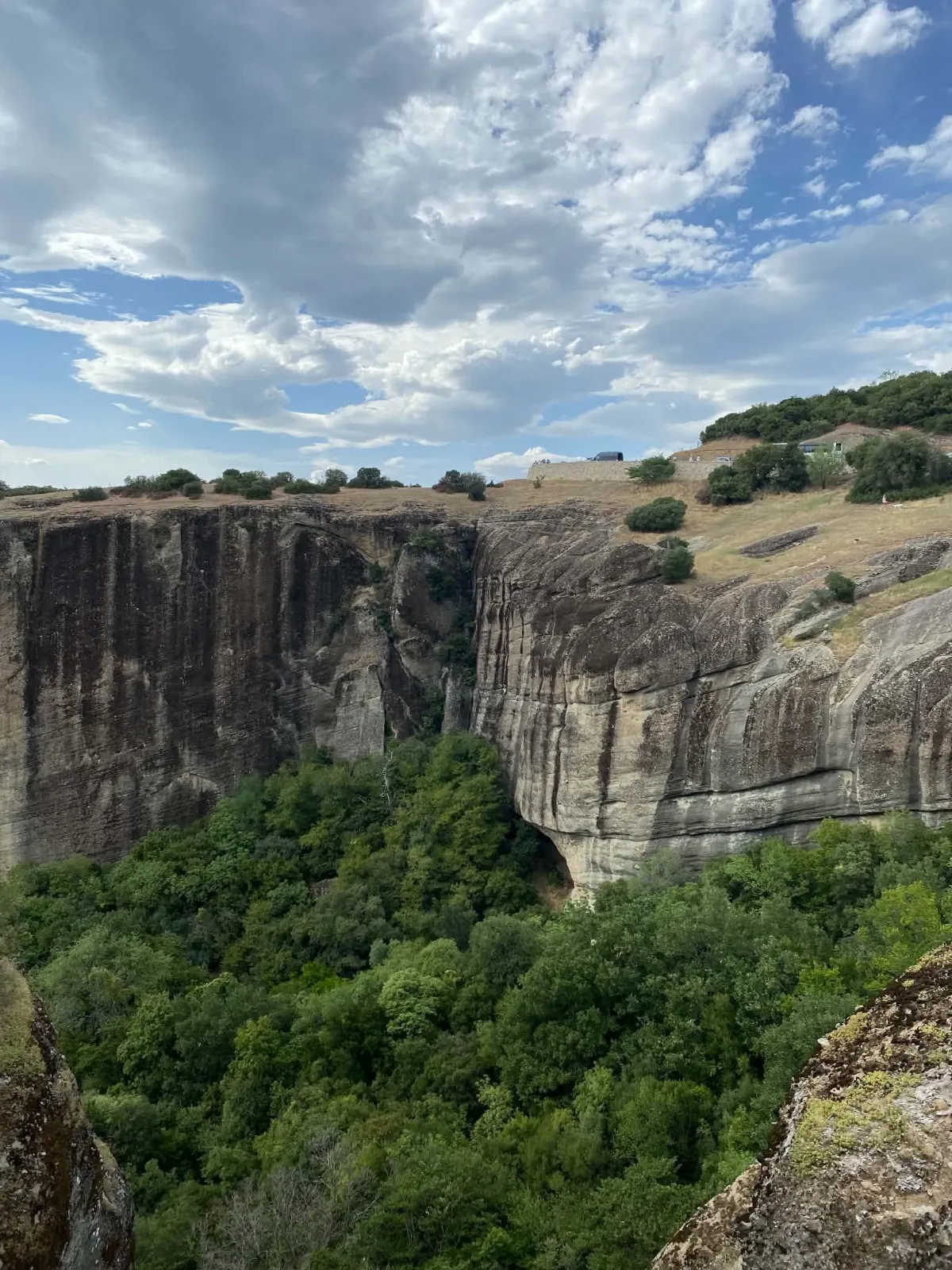
Sixty million years ago this was a river delta. The sediment compacted into conglomerate — pebbles set in sandstone, like poured concrete — and then the ground rose and the softer material eroded away, leaving several hundred pillars standing free on the floor of the Thessalian plain, some of them three hundred metres tall, with vertical faces and flat tops.
Nothing about them is subtle. You come around a bend below Kalambaka and they are simply there, grey and enormous and completely unlike anything around them. It is the single most photographed landscape in Greece after Santorini, and unlike Santorini it is not crowded.
They are also one of Europe’s great climbing grounds, bolted since the 1970s and still working.
The monasteries
Hermits were living in the caves and fissures by the eleventh century, hauling themselves up on ropes to be left alone. What changed it was Athanasios, a scholar-monk out of Mount Athos, who arrived around 1333 and by about 1340 had founded a proper community on the Broad Rock — the Great Meteoron.
The lineage is direct: Athos taught Athanasios, Athanasios built Meteora, and Meteora became the second monastic centre of the Orthodox world. He brought the Athonite rule with him. It is why this place looks and works the way it does.
His successor was a former Serbian emperor who had given up the throne to become a monk here, and who paid for the church. By the sixteenth century twenty-four monasteries crowned the pillars, at a moment when the Ottoman conquest had made an inaccessible rock the safest address in Greece. Then came three centuries of decline, bombing and looting in the Second World War, and what survived is six.
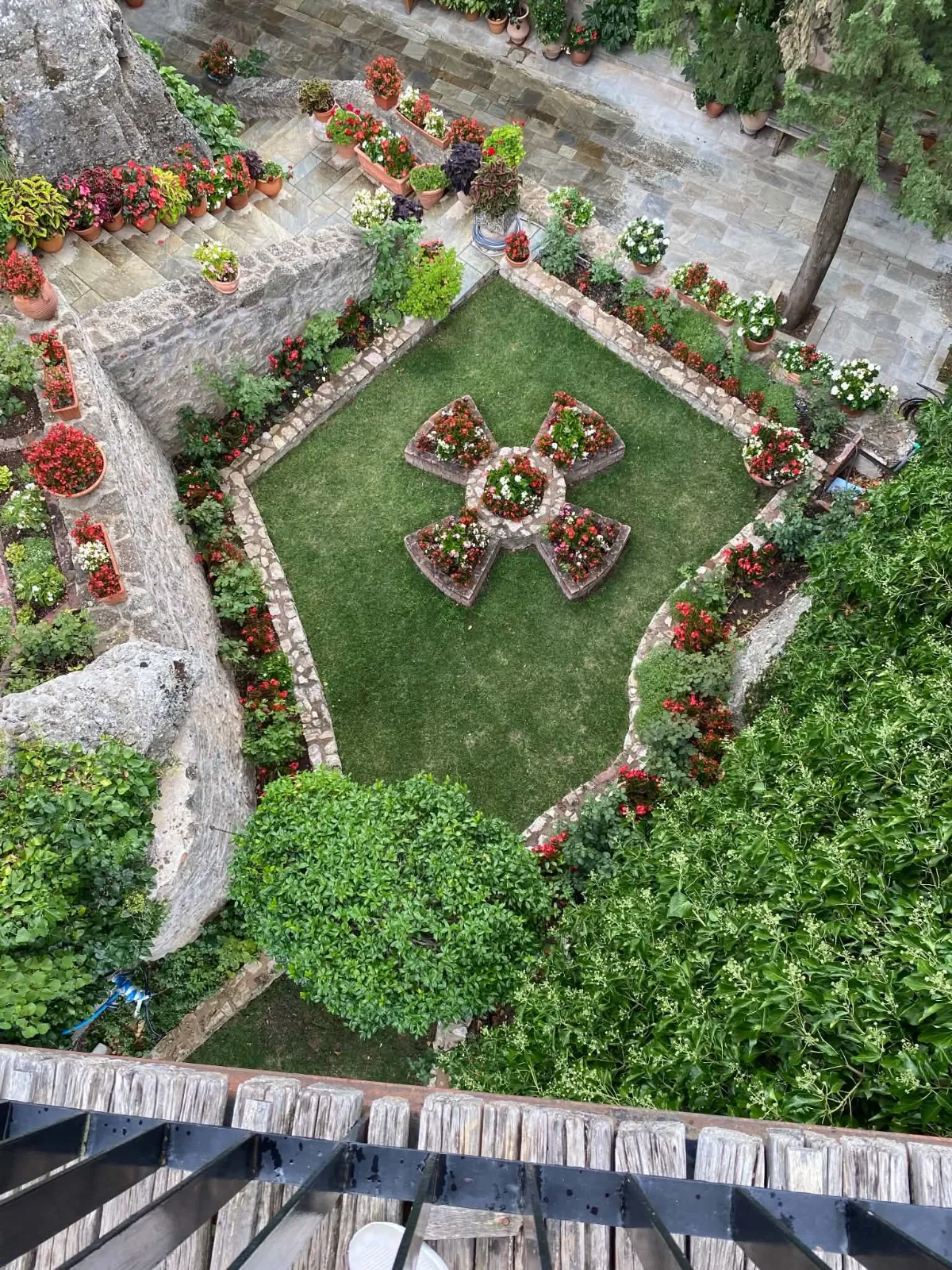
Great Meteoron is the oldest and largest, on the highest of the accessible rocks — a katholikon with sixteenth-century frescoes, a refectory, a library holding 610 manuscripts, and an ossuary where the skulls of past monks are stacked in rows and labelled. Varlaam is the second largest, re-founded in 1517, and it has the windlass tower. Rousanou sits low and is the easiest to reach, a convent now, so compact that the building seems to have grown out of the rock rather than been placed on it. St Nicholas Anapafsas, St Stephen and Holy Trinity complete the six.
Is the price per person or per group?
Per group. The €800 covers the whole 12-hour tour for up to 7 passengers in one minivan — it is not multiplied by the number of people.
What is the dress code?
Modest dress is required in all six monasteries. Shoulders must be covered, and knees — men in long trousers, women in skirts below the knee. Trousers are not accepted for women in most of them. Wrap-around skirts are usually available to borrow at the entrance, but bringing your own is easier. It applies to visitors of any faith or none.
Are all six monasteries open every day?
No. Each one closes on a different day of the week, and the days change between the summer and winter timetables. We check the schedule for your date and plan the route around what is open.
How far is Meteora from Athens?
About 350 kilometres, roughly four hours each way on motorway. It is the longest of our day trips.
Is Meteora a UNESCO World Heritage Site?
Yes, since 1988 — and it is one of only two sites in Greece inscribed for both its cultural and its natural value. The other is Mount Athos.
Can we go inside the monasteries, or only look at them?
Inside. The six active monasteries are open to visitors — the churches, the frescoes, the refectories, the museums. They are working religious houses, not ruins, so photography is restricted inside the churches.
Is a guide included?
No. The price covers an English-speaking driver, not a licensed guide. A licensed guide can be added for €320; for other languages, contact us. When you book a guide, remote guiding devices are included.
Are entrance fees included?
No. Each monastery charges its own admission, paid on the spot.
How much walking is there?
A fair amount, and it is mostly stairs. Every monastery is reached by a staircase cut or built into the rock — Great Meteoron has the longest, and Rousanou the shortest. There are no lifts for visitors. Sturdy shoes matter.
When is the best time of year?
Meteora works year-round, which is unusual for Greece. Spring is greenest, autumn clearest. Summer is hot but the rocks give shade the archaeological sites never do. Winter brings mist that sits in the valley and leaves the monasteries floating above it — which is where the name comes from, and the reason some people come in January on purpose.
Included in the tour price:
- English speaking driver
- Pick-up & Drop-off service from the hotel
- Remote guiding system (“whisperers” devices) when you book guide services
- All expenses of the driver (accommodation during multi-day tours, meals, insurance)
- Tolls
- All currently applicable taxes
Not included in the tour price:
- Accommodation during multi-day tours & meals for the guests; we can assist you with these arrangements
- Entrance fees to museums & archaeological sites: these are payable on the spot, as you go
- Guide Services unless you select the extra service