Lefkada Island
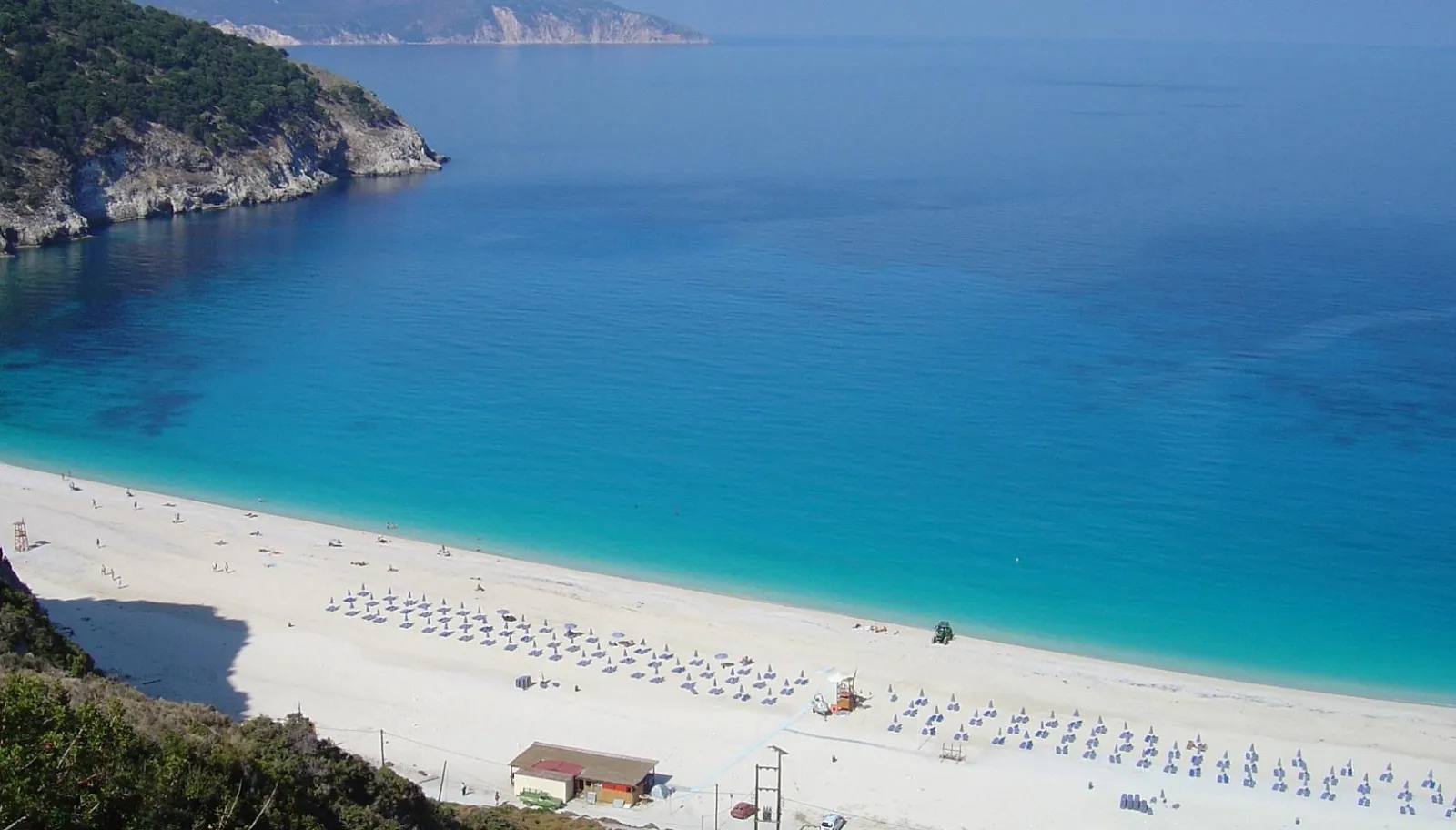
Lefkada is the one Ionian island you can drive to. A narrow channel separates it from the coast of Aetolia-Acarnania, and a causeway and floating bridge carry the road across — which means no ferry timetable, no port, and no crossing to plan around. Everything else about it is Ionian: white cliffs down the west coast, deep green mountains inland, and water that photographs as though it has been retouched.
Lefkada is one of our private transfer destinations from Athens, the airport and Piraeus.
See transfer route from Athens Airport to Lefkada →
See transfer route from Athens city to Lefkada →
The channel and the floating bridge
The strait between Lefkada and the mainland is shallow and was first cut as a navigable channel in antiquity. The modern crossing is a causeway ending in a floating swing bridge, which pivots aside on a schedule to let boats through the canal and closes again behind them.
It is worth knowing about before you travel. When the bridge opens, road traffic waits — usually a matter of minutes, but it is the one fixed point in an otherwise flexible journey.
Why it is called Lefkada
The name means “white”, and it comes from the cliffs at Cape Lefkatas at the island’s southern tip, which fall in a sheer white wall to the sea. The cape held a sanctuary of Apollo in antiquity, and it is the setting of the legend that Sappho threw herself from the rock over her love for Phaon — a story that first appears long after her lifetime and belongs to literature rather than history, but which has attached itself to the cliff ever since.
The west coast beaches
The west coast is what most visitors come for. The mountains drop straight into the sea and the beaches sit at the foot of white limestone cliffs, which is what gives the water its colour.
Porto Katsiki is the best known, reached by a stepped path down from the clifftop car park. Kathisma is the longest and the easiest to reach, with beach bars and space to spread out. Egremni was cut off when its access road collapsed in the 2015 earthquake and is now reached principally by boat.
Vassiliki and Nydri
Vassiliki, in the south, has one of the most reliable afternoon winds in the Mediterranean and has been a serious windsurfing destination for decades.
Nydri, on the sheltered east coast, faces a scatter of small islands including Skorpios, bought by Aristotle Onassis in 1962. It is also where the German archaeologist Wilhelm Dörpfeld excavated for much of his life, convinced that Lefkada — not modern Ithaki — was the Ithaca of the Odyssey. The theory has never been generally accepted, but Dörpfeld is buried on the island.
Lefkada town
The town sits at the northern end, beside the bridge. Its architecture is unlike anywhere else in Greece and the reason is seismic: after repeated earthquakes, houses were rebuilt with a solid ground floor and a light timber-framed upper storey clad in painted metal sheeting, so that the top of the building could flex or fail without bringing the rest down. The result is a town of pastel corrugated façades that looks improvised and is in fact carefully engineered.
Visiting Lefkada
Driving time from Athens city
4 hours 30 minutes to 5 hours 15 minutes
Driving time from Athens Airport
4 hours 50 minutes to 5 hours 30 minutes
Driving time from Piraeus
4 hours 40 minutes to 5 hours 25 minutes
Getting there
By road throughout. No ferry crossing
Getting around
A car is needed. The west coast beaches are not served by public transport
Best time to visit
May to early October. The west coast beaches are exposed and best in settled weather