Nemea
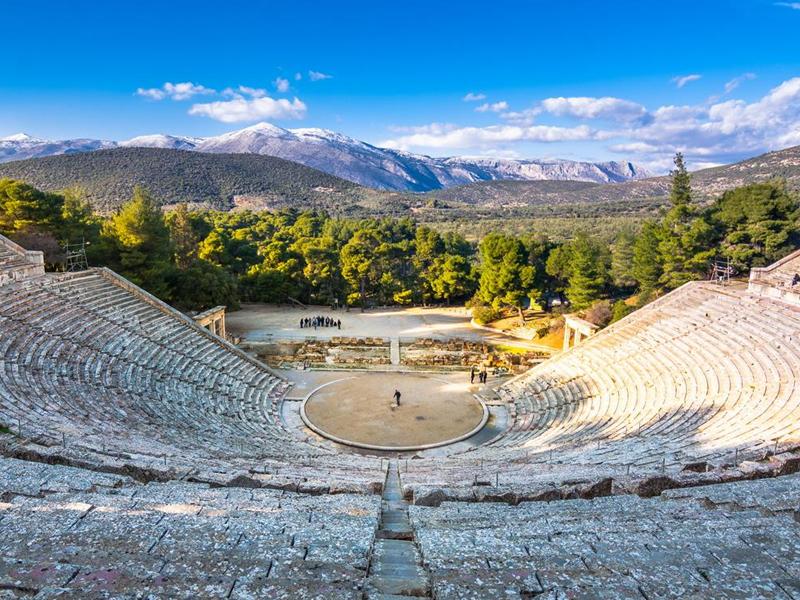
Nemea sits in a fertile upland valley in the northern Argolid, south-west of Athens. It is two things at once: one of the four great sanctuaries of the ancient Greek world, where the Nemean Games were held in honour of Zeus, and the largest red wine appellation in Greece. Both are still alive — the stadium still hosts races every four years, and the vineyards still grow the grape that has been planted here since antiquity.
Nemea is included in several of our private multi-day tours of the Peloponnese.
The Sanctuary of Zeus
Nemea was one of four sites in the panhellenic cycle, alongside Olympia, Delphi and Isthmia. During each festival a sacred truce suspended hostilities across the Greek world, and competitors travelled from every city to take part. The Games at Nemea are recorded from 573 BC and were held every two years, in the years either side of the Olympics.
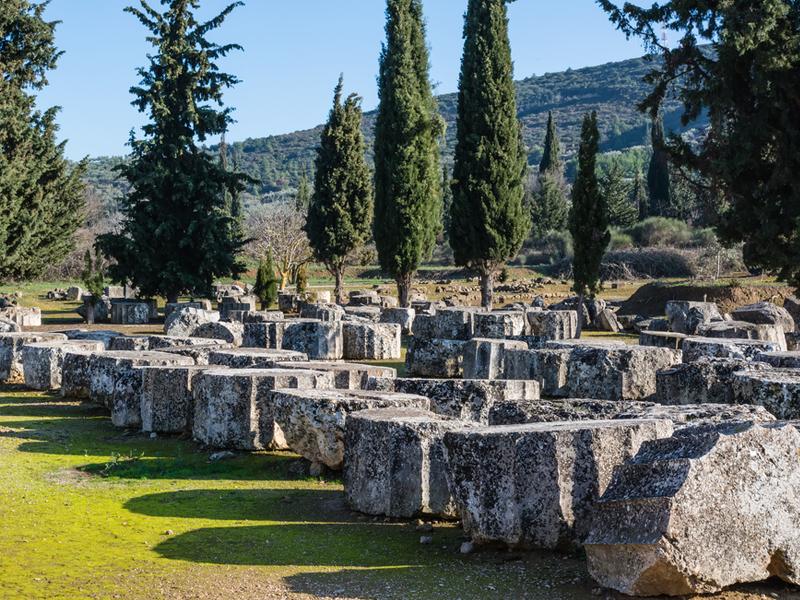
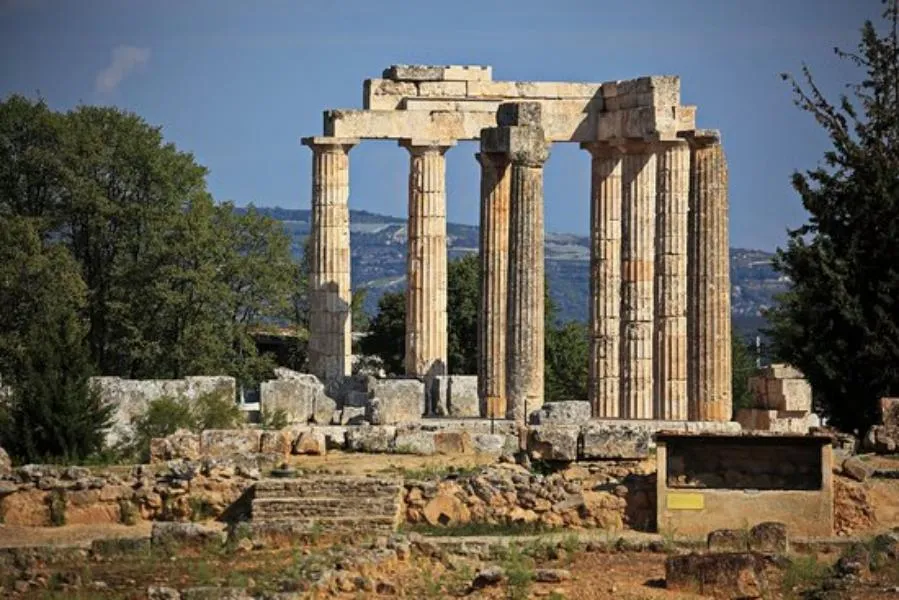
At the centre of the sanctuary stands the Temple of Zeus, built around 330 BC. For centuries only three columns remained upright; a long restoration programme has since re-erected several more, and the temple is once again legible as a building rather than a ruin.
The stadium and the athletes’ tunnel
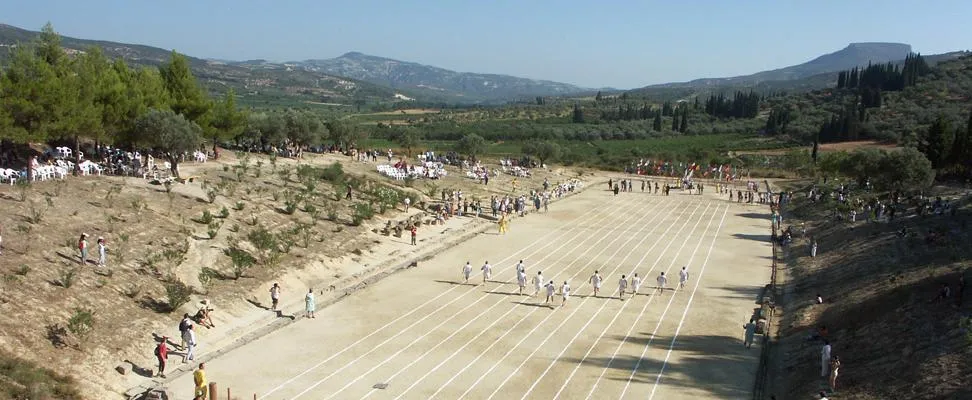
The stadium lies a short walk from the sanctuary and is what most visitors remember. Built around 330 BC, it preserves the apodyterion where athletes changed, the vaulted entrance tunnel through which they walked into the arena, and the stone starting line still in place at the head of the track.
The tunnel is among the earliest true arches known in Greece, and its walls carry graffiti scratched by competitors more than 2,300 years ago. Visitors enter the stadium through it, on the same ground.
Herakles and the Nemean Lion
In myth, Nemea is where Herakles killed the Nemean Lion — the first of his twelve labours, and the source of the lion skin he wears in almost every depiction of him afterwards. The distance race at the modern Games is named “The Footsteps of Herakles” after it.
The Archaeological Museum of Nemea
The museum stands beside the site and holds the finds from more than fifty years of excavation. Nemea has been dug since 1973 by the University of California, Berkeley, under Stephen G. Miller, whose work both uncovered the stadium and led to the revival of the Games.
The wine of Nemea
Nemea is the largest PDO red wine zone in Greece, and its grape is Agiorgitiko — deep-coloured, soft in tannin, grown in this valley since antiquity and found nowhere else in the same concentration. The appellation spans a wide altitude range, from around 250 to over 800 metres, and the same variety produces markedly different wines depending on where it is planted: fuller and riper low down, fresher and more structured on the higher slopes.
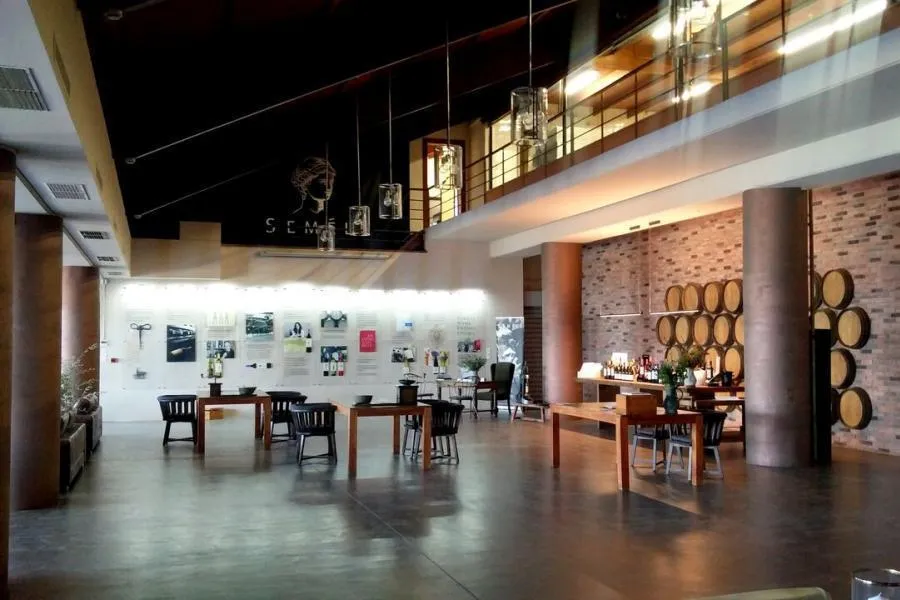
Many of the valley’s wineries receive visitors for tours and tastings, most by prior arrangement.
The modern Nemean Games
The Games were revived in 1996, when more than 650 people from some thirty countries ran barefoot in the ancient stadium for the first time in over two millennia. They have been held every four years since.
They are deliberately open to everyone. There are no records and no medals. Competitors run a 90-metre sprint barefoot, wearing a plain white chiton, grouped by age and gender, starting from the same line and entering through the same tunnel as the ancient athletes. Anyone aged eight or over can enter, with no upper age limit, and younger children may run accompanied by a parent. Winners receive a ribbon, a palm branch and a crown of wild celery, as they did in antiquity.
The eighth revival was held on 28–30 June 2024. The next Games are scheduled for summer 2028. Registration and full details are published by the Society for the Revival of the Nemean Games.
Visiting Nemea
| Distance from Athens | About 120 km |
| Driving time | Roughly 1 hour 20 minutes |
| How long you need | 2–3 hours for the sanctuary, stadium and museum |
| Best time to visit | April–June and September–October. Harvest runs from late August into September |
| Tickets | A combined ticket covers the site and the museum |
| Nearby | Mycenae approx. 25 min · Corinth Canal approx. 30 min · Nafplio approx. 45 min |